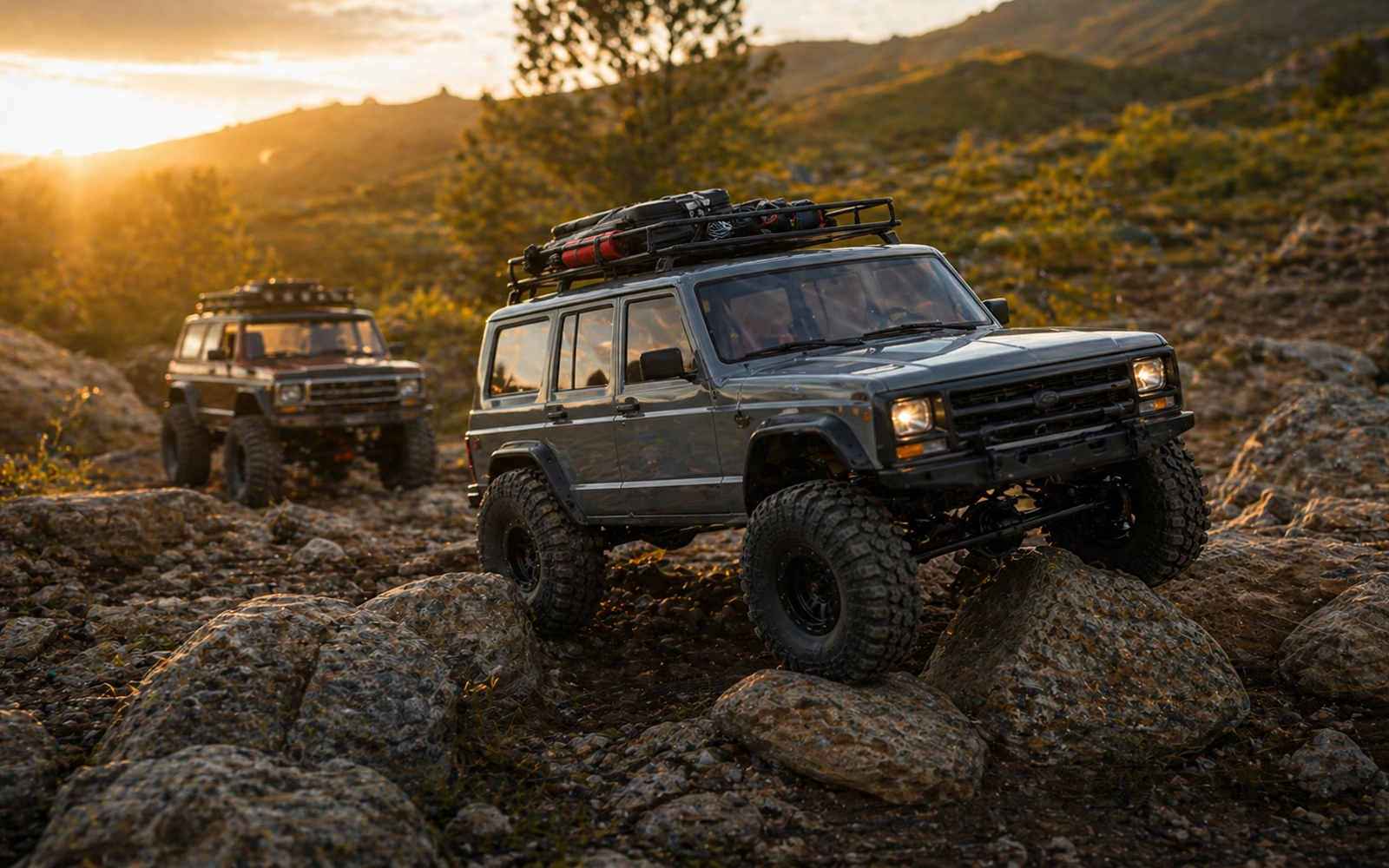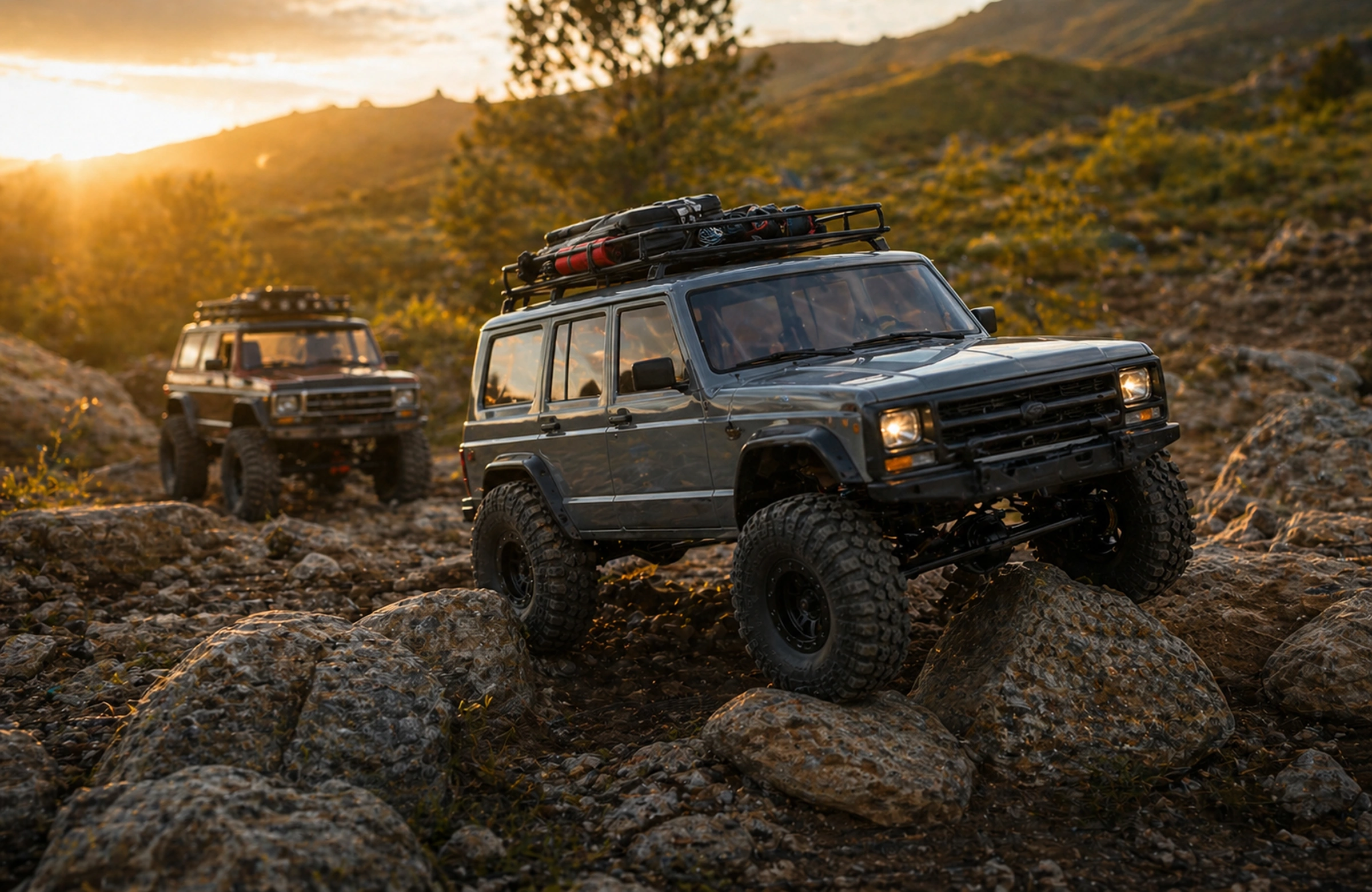
Start with the body and stance target
A scale build should start with the look you want and the measurements that make it work. Body length, wheelbase, tire outside diameter, wheel offset, bumper position, and accessory weight decide whether a realistic idea becomes a usable truck.
Body fit research
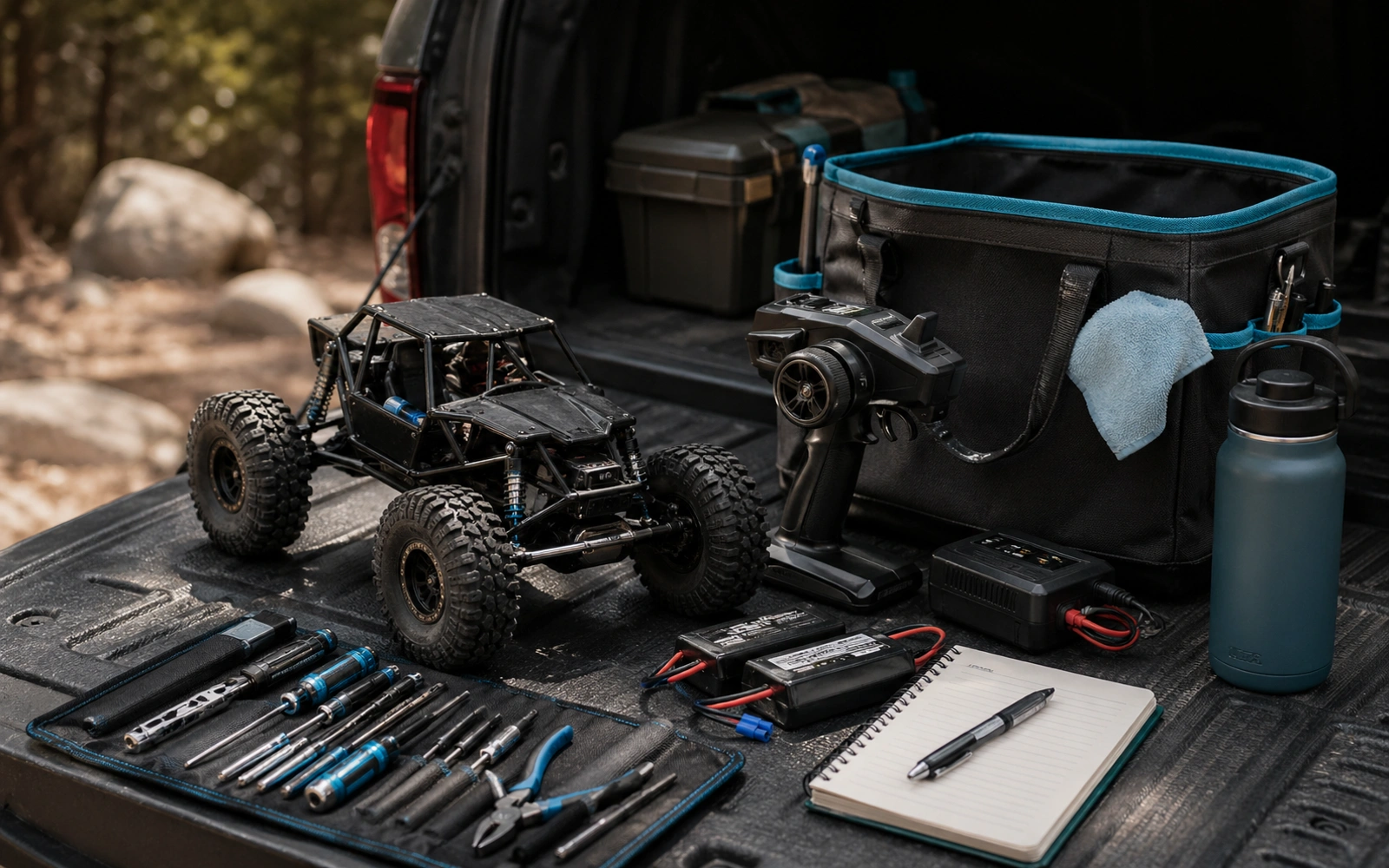
Body choice affects wheelbase, tire clearance, bumper fit, ride height, battery space, and electronics access. Compare body length, mount style, trim notes, interior space, and source-page fitment notes before buying a shell, hardbody, mount kit, or printed body part.
Wheelbase, body width, tire outside diameter, bumper overhang, and shock tower clearance.
Whether mounts, magnets, clips, hardware, spacers, or printed adapters are included.
Hardbody, lexan body, printed part, STL file, mount kit, and accessory bundle.
Stance, tires, and wheels
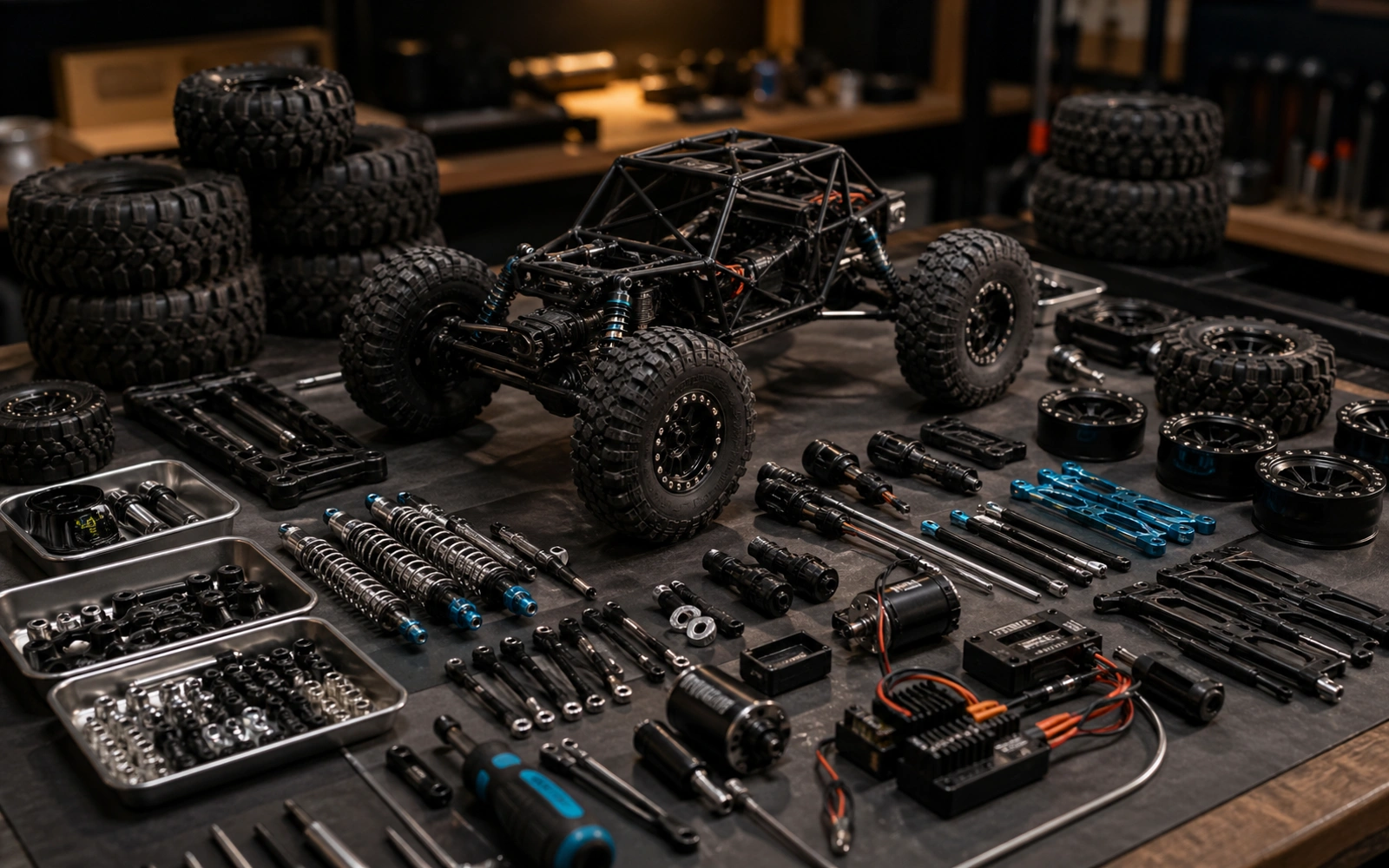
Scale stance is part appearance and part clearance. Research tire outside diameter, wheel width, offset, hex size, insert support, body rub, and class or event limits before comparing wheel and tire offers.
Accessory source checks
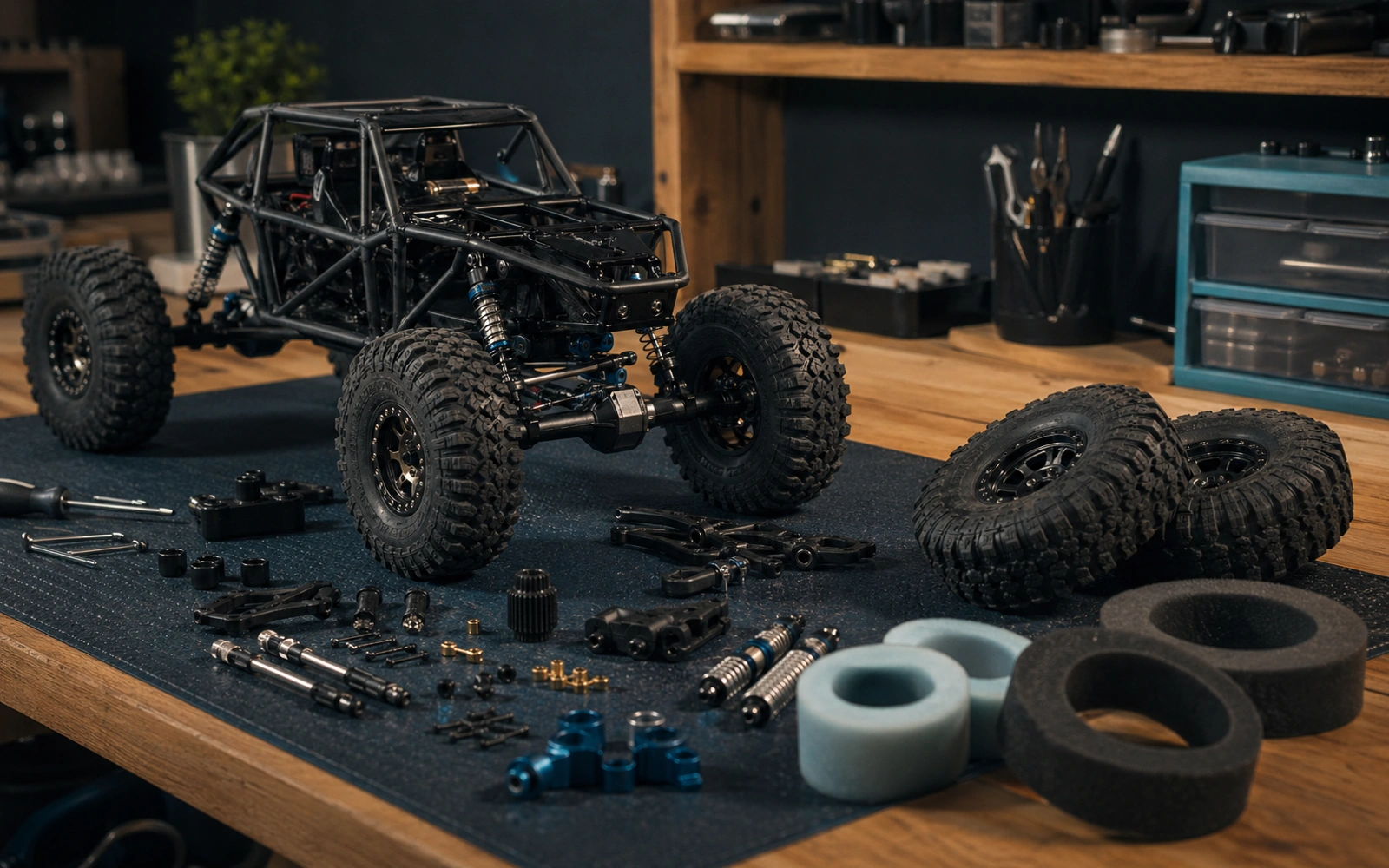
Scale accessories need more than a nice photo. Check dimensions, mount method, hardware, material, weight, snag points, and whether the part is physical, printed, or a file. Compare seller/source pages for stock labels, price range, and included hardware.
Printed scale parts and files
Printed interiors, mounts, bumpers, roof racks, and details still need source trust, license review, material choice, orientation, hardware, and test fitting. A digital file listing is not the same thing as a ready-to-install part.
Rules and source checks
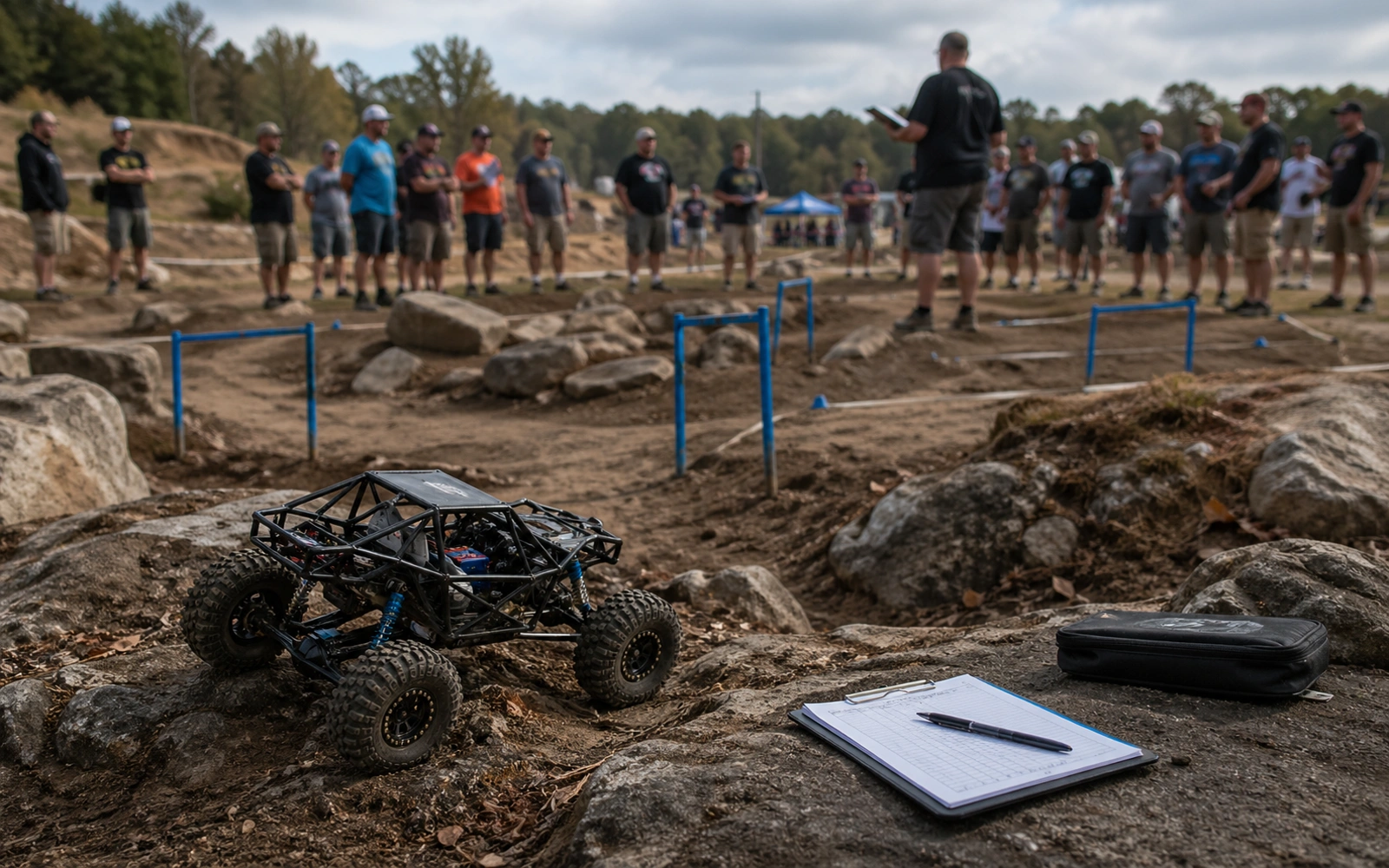
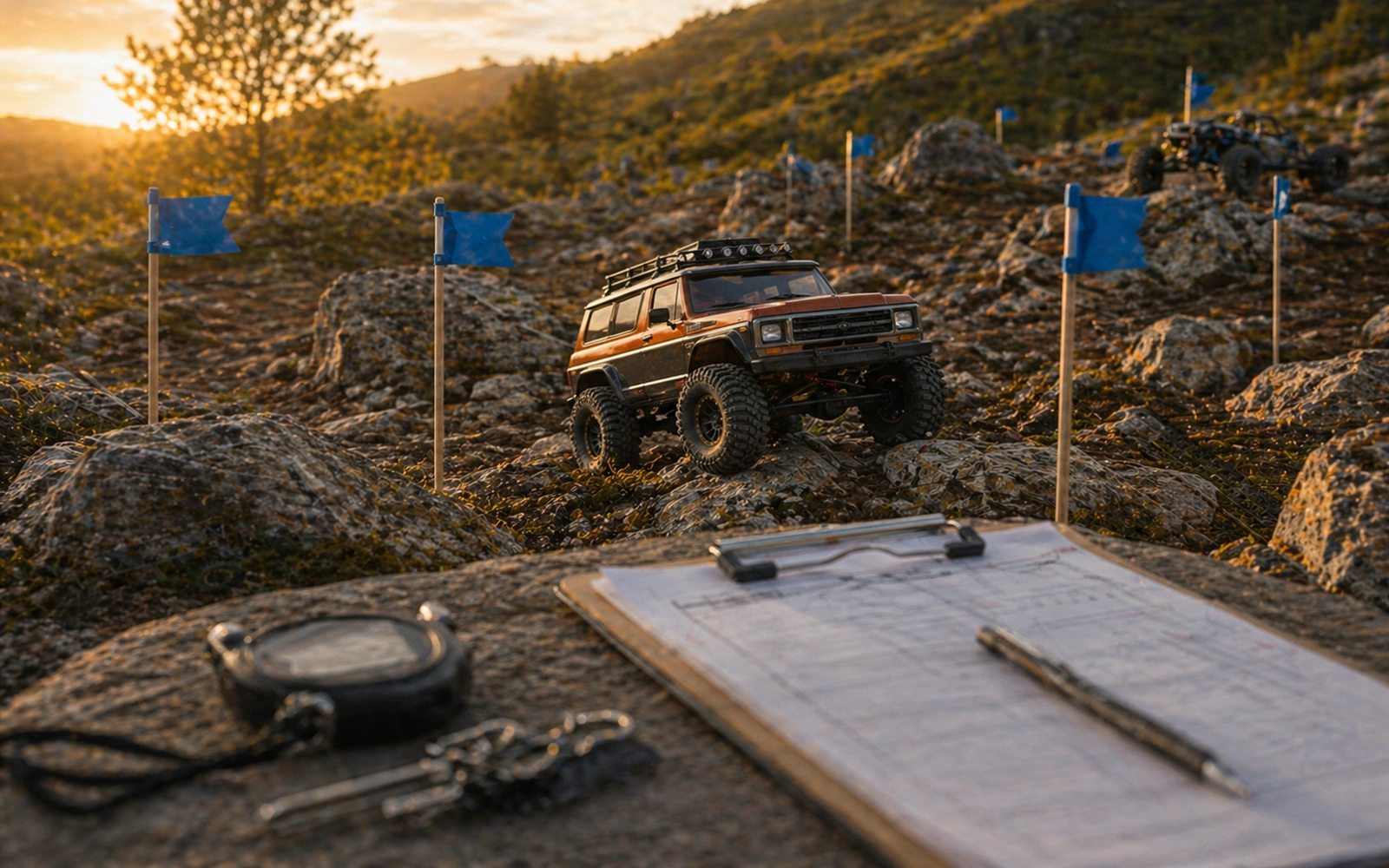
If a scale build is headed to a meet or event, verify current organizer rules before buying class-defining bodies, tires, chassis parts, portals, bumpers, or accessories. For normal shopping, verify seller/source pages for SKU, MPN, stock state, price range, included hardware, and support notes.
Body, wheelbase, tire size, accessory notes, platform version, and current modifications.
Variant, dimensions, material, included hardware, stock label, and support notes.
Organizer source for class placement, scale detail expectations, and class-defining parts.
Research next
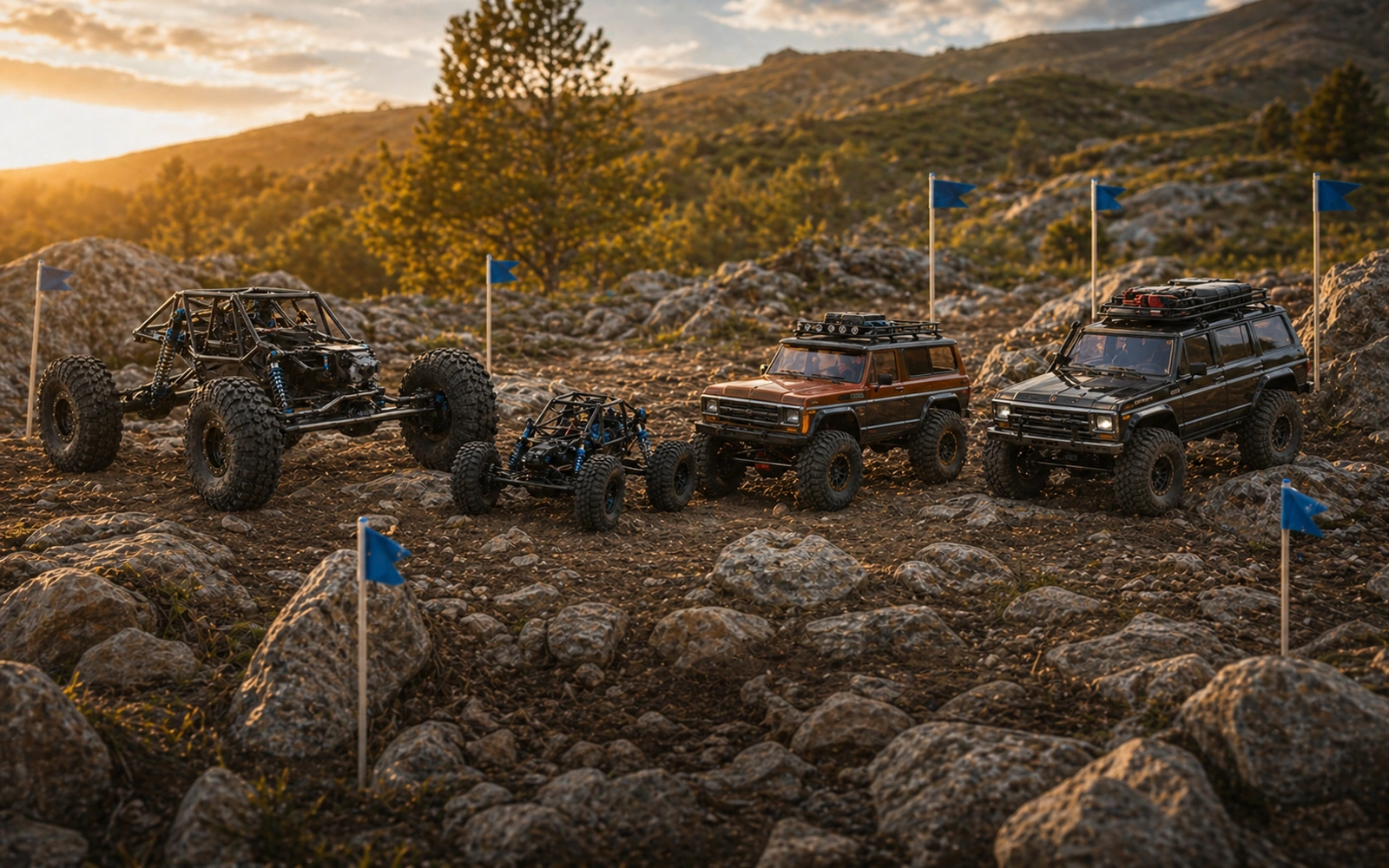
Use these paths when the body, stance, and accessory plan are specific enough to compare evidence. They are research lanes for fitment, source quality, stock labels, and price range.