Source used
This page cites the public 2025 RCMCCA Rulebook PDF, revised March 1, 2025. The rulebook describes three main competition classes and optional Class 0 and Hardbody classes. This guide does not copy the tables; it gives beginners a mental model before they read the PDF and local event notes.
Think of the classes as a ladder
In broad terms, the lower classes ask for more scale-like limits and the upper classes allow more performance freedom. That does not mean one class is better. It means the build target changes. A driver who enjoys realistic micro trucks may love the lower end. A driver who wants fewer restrictions may prefer the higher end.
Class 0 and Class 1 orientation
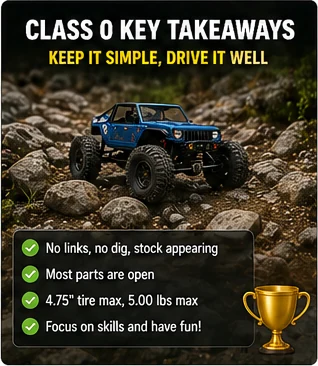
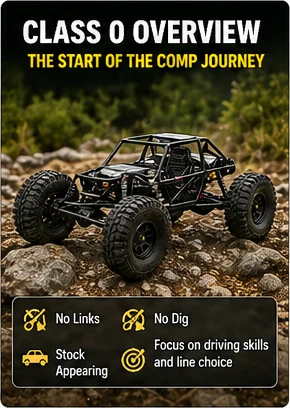
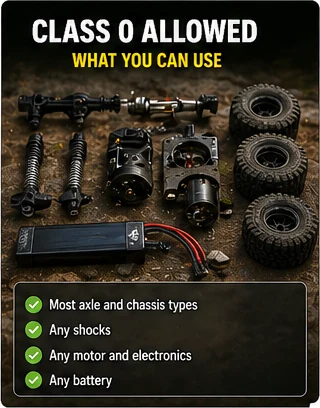
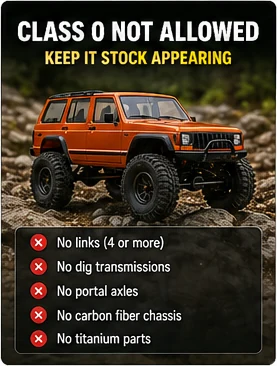
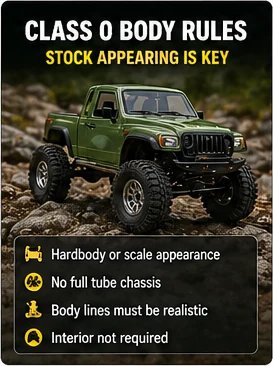
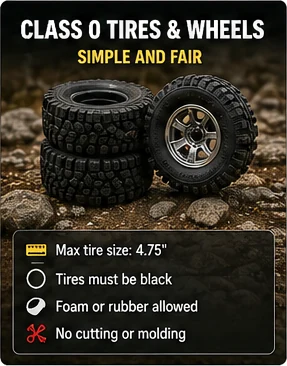
Class 0 is presented as an optional entry-oriented class, while Class 1 is a more defined scale-leaning competition class. Beginners should pay attention to body, bumper, wheel, tire, chassis, steering, and gate expectations in the PDF before buying parts. Small micro dimensions leave very little room for assumptions.
Class 2 and Class 3 orientation
Class 2 relaxes some scale limitations while keeping defined boundaries. Class 3 is more open and performance-focused. A part that makes sense for Class 3 may move a truck out of Class 1 or Class 2. Build direction matters before the upgrade ladder begins.
Hardbody notes
Hardbody language matters because rigid bodies can be judged differently from lexan bodies and may carry their own requirements or optional-class treatment. A hardbody build should be planned around the active event rules, not around a social-media caption.
How beginners should use this explainer
Read this page before reading the full rule source so the class or scoring language feels less abstract. Then read the current organizer document line by line, because small details can decide whether a rig passes tech inspection or how a judge scores a mistake. A plain-English explainer should make the official source easier to approach, not replace it.
If you are unsure, bring your rig or planned parts list to a local event, club night, or organizer contact before spending heavily. Experienced drivers can often point out the one rule or fitment detail a newcomer missed. That early conversation is usually cheaper than rebuilding the truck after registration.
- Find the current rule source before buying class-defining parts.
- Ask the organizer how local tech inspection handles edge cases.
- Treat social posts and old setup sheets as examples, not authority.
- Keep the rig adjustable until you have run the class at least once.

What to verify before event day
Rules pages can age quickly because clubs refine procedures, add local notes, and clarify calls after real events. Before event day, confirm the active class list, tire and body limits, scoring method, course flow, repair procedure, and whether the event uses any local amendments. If the organizer says something different from this page, follow the organizer.
Good preparation also means respecting the spirit of the class. A build that barely passes because of a loophole may not be the best first experience. New drivers usually learn faster with a reliable, legal rig that lets them focus on line choice, judging rhythm, and driver etiquette.
- Active rulebook or organizer post.
- Driver meeting notes and local amendments.
- Tech inspection expectations.
- Scoring procedure and time limits.