Gates and progress
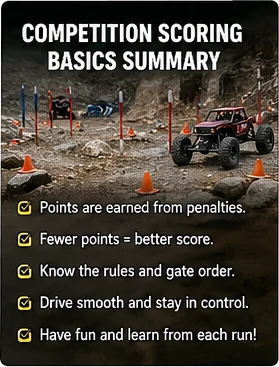
Most crawler courses use gates to define the intended path. Passing a gate cleanly can create progress credit, while hitting a marker, missing a direction, or crossing a boundary can create penalties. The important beginner lesson is that gates are not just obstacles; they are the scoring language of the course.

Reverses and corrections
A reverse is often counted because backing up can reduce the difficulty of a line. Some events count every reverse, some define it carefully, and some use different procedures for repositioning or recovery. Do not assume a practice habit is legal until the driver meeting confirms it.
Boundaries, rollovers, and repairs
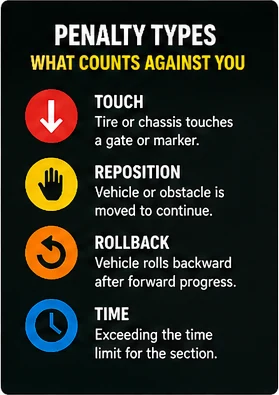
Boundary markers, rollovers, hand recoveries, repairs, and touches can all affect a score. The details matter. A quick repair might be allowed with a penalty, or it might end a run depending on the event. A rollover may have a self-recovery option in one context and a touch penalty in another.

Time pressure
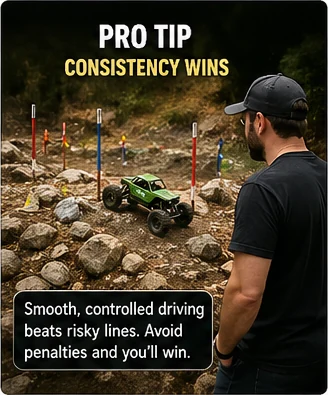
The clock changes decision-making. A perfect line that takes too long can be worse than a controlled penalty that finishes the course. Beginners should learn the time limit before starting and practice making simple decisions under mild pressure.
How to use this guide
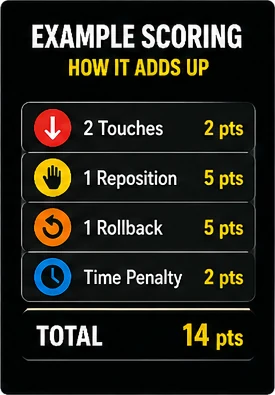
Use this page to recognize the words on a scorecard, not to challenge a judge with a web page. The organizer's current rules, posted event notes, and driver meeting are the authority for that event.
How beginners should use this explainer
Read this page before reading the full rule source so the class or scoring language feels less abstract. Then read the current organizer document line by line, because small details can decide whether a rig passes tech inspection or how a judge scores a mistake. A plain-English explainer should make the official source easier to approach, not replace it.
If you are unsure, bring your rig or planned parts list to a local event, club night, or organizer contact before spending heavily. Experienced drivers can often point out the one rule or fitment detail a newcomer missed. That early conversation is usually cheaper than rebuilding the truck after registration.
- Find the current rule source before buying class-defining parts.
- Ask the organizer how local tech inspection handles edge cases.
- Treat social posts and old setup sheets as examples, not authority.
- Keep the rig adjustable until you have run the class at least once.
What to verify before event day
Rules pages can age quickly because clubs refine procedures, add local notes, and clarify calls after real events. Before event day, confirm the active class list, tire and body limits, scoring method, course flow, repair procedure, and whether the event uses any local amendments. If the organizer says something different from this page, follow the organizer.
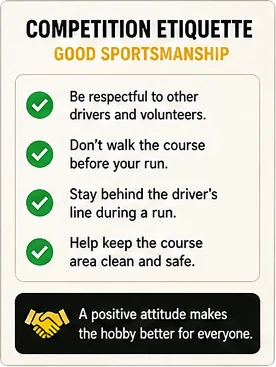
Good preparation also means respecting the spirit of the class. A build that barely passes because of a loophole may not be the best first experience. New drivers usually learn faster with a reliable, legal rig that lets them focus on line choice, judging rhythm, and driver etiquette.
- Active rulebook or organizer post.
- Driver meeting notes and local amendments.
- Tech inspection expectations.
- Scoring procedure and time limits.