
What a course measures

A course tests whether a driver can move a legal rig through marked gates with control. The best line may be slower, wider, or less dramatic than the line spectators notice first. Competitions reward planning, precision, recovery decisions, and knowing when a risky move is worth the penalty risk.
Classes come first

Before you buy class-defining parts, know the class you plan to enter. Wheelbase, tire size, body coverage, steering type, chassis style, and other details can matter. A rig can be impressive and still wrong for the class. Healthy local participation also matters; build for a class you can actually run near you.
Tech inspection
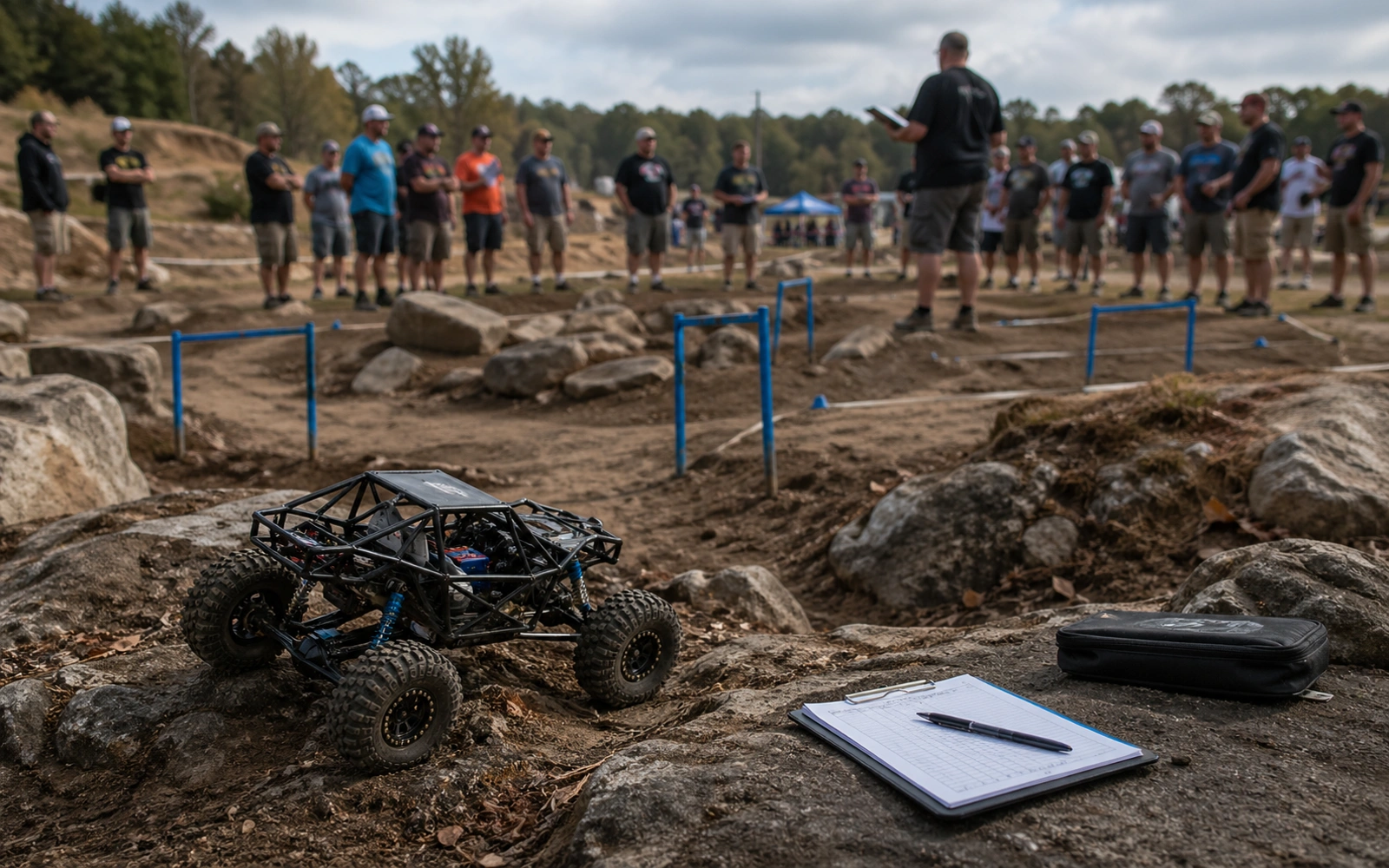
Tech inspection is the organizer's check that the rig belongs in the class. It is not personal, and it is not the moment to discover you misunderstood the rulebook. Bring the rig early, keep tools nearby, and treat corrections as part of participating in a shared game.
Practice for consistency
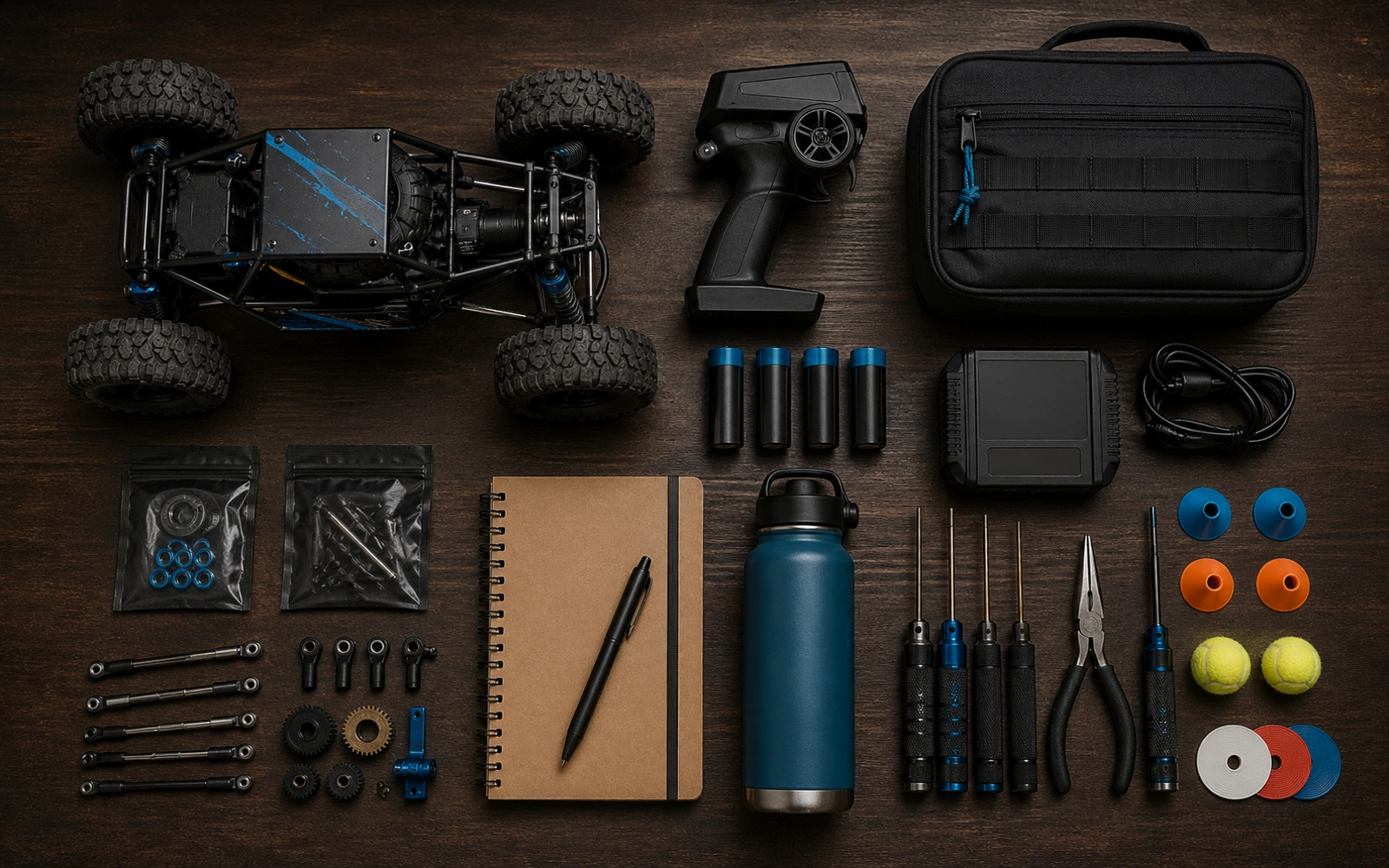
Practice gates, sidehills, reverses, and recoveries. Time yourself sometimes, but do not make speed the only goal. A calm driver who understands the scoring system often beats a faster driver who keeps forcing bad lines.
Respect the event
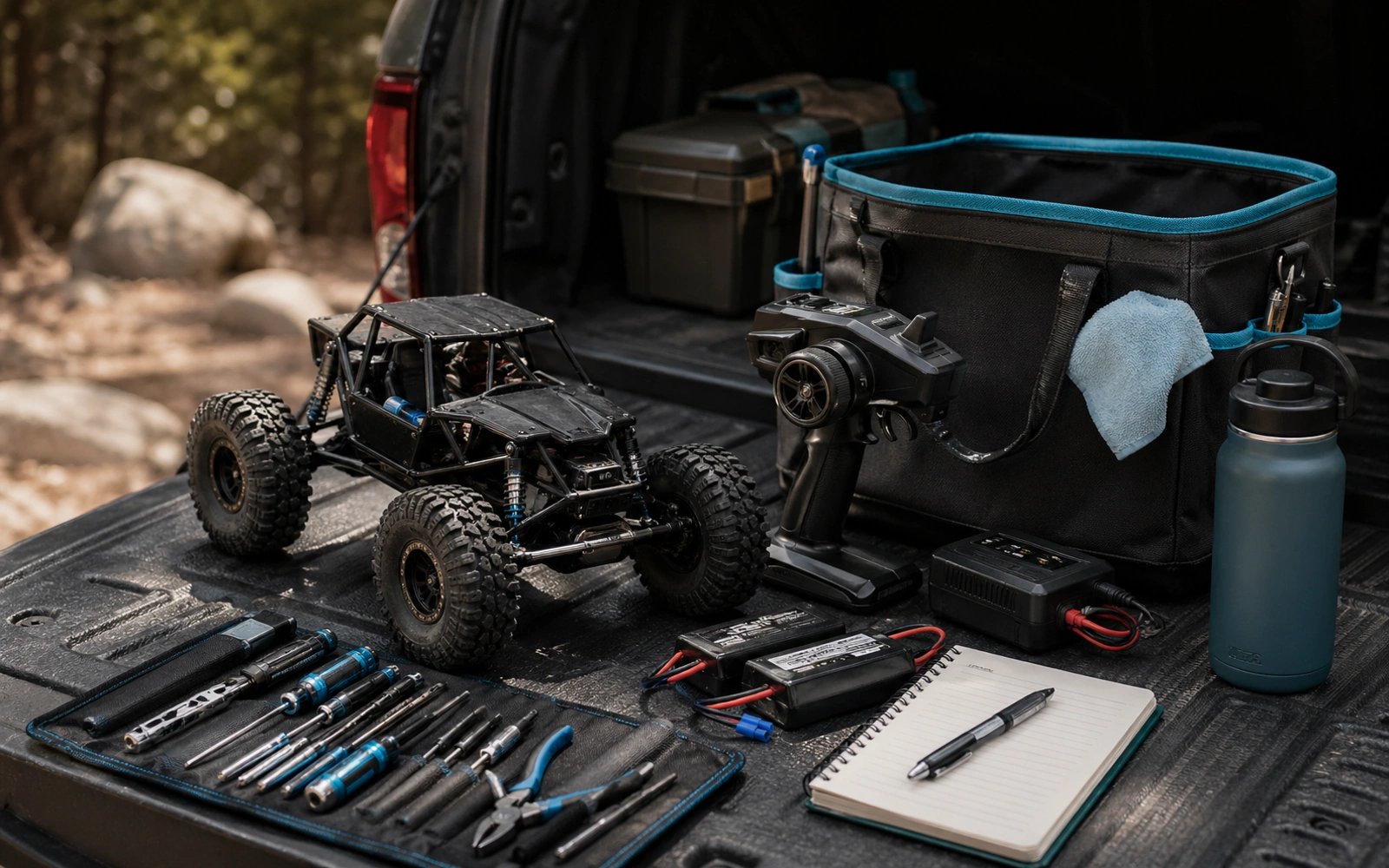
Judges and organizers are often volunteers. Listen to the driver meeting, accept calls calmly, and ask questions at appropriate moments. If you disagree with a call, follow the event process rather than turning a beginner-friendly day into an argument.
How beginners should use this explainer

Read this page before reading the full rule source so the class or scoring language feels less abstract. Then read the current organizer document line by line, because small details can decide whether a rig passes tech inspection or how a judge scores a mistake. A plain-English explainer should make the official source easier to approach, not replace it.
If you are unsure, bring your rig or planned parts list to a local event, club night, or organizer contact before spending heavily. Experienced drivers can often point out the one rule or fitment detail a newcomer missed. That early conversation is usually cheaper than rebuilding the truck after registration.
- Find the current rule source before buying class-defining parts.
- Ask the organizer how local tech inspection handles edge cases.
- Treat social posts and old setup sheets as examples, not authority.
- Keep the rig adjustable until you have run the class at least once.
What to verify before event day

Rules pages can age quickly because clubs refine procedures, add local notes, and clarify calls after real events. Before event day, confirm the active class list, tire and body limits, scoring method, course flow, repair procedure, and whether the event uses any local amendments. If the organizer says something different from this page, follow the organizer.
Good preparation also means respecting the spirit of the class. A build that barely passes because of a loophole may not be the best first experience. New drivers usually learn faster with a reliable, legal rig that lets them focus on line choice, judging rhythm, and driver etiquette.
- Active rulebook or organizer post.
- Driver meeting notes and local amendments.
- Tech inspection expectations.
- Scoring procedure and time limits.