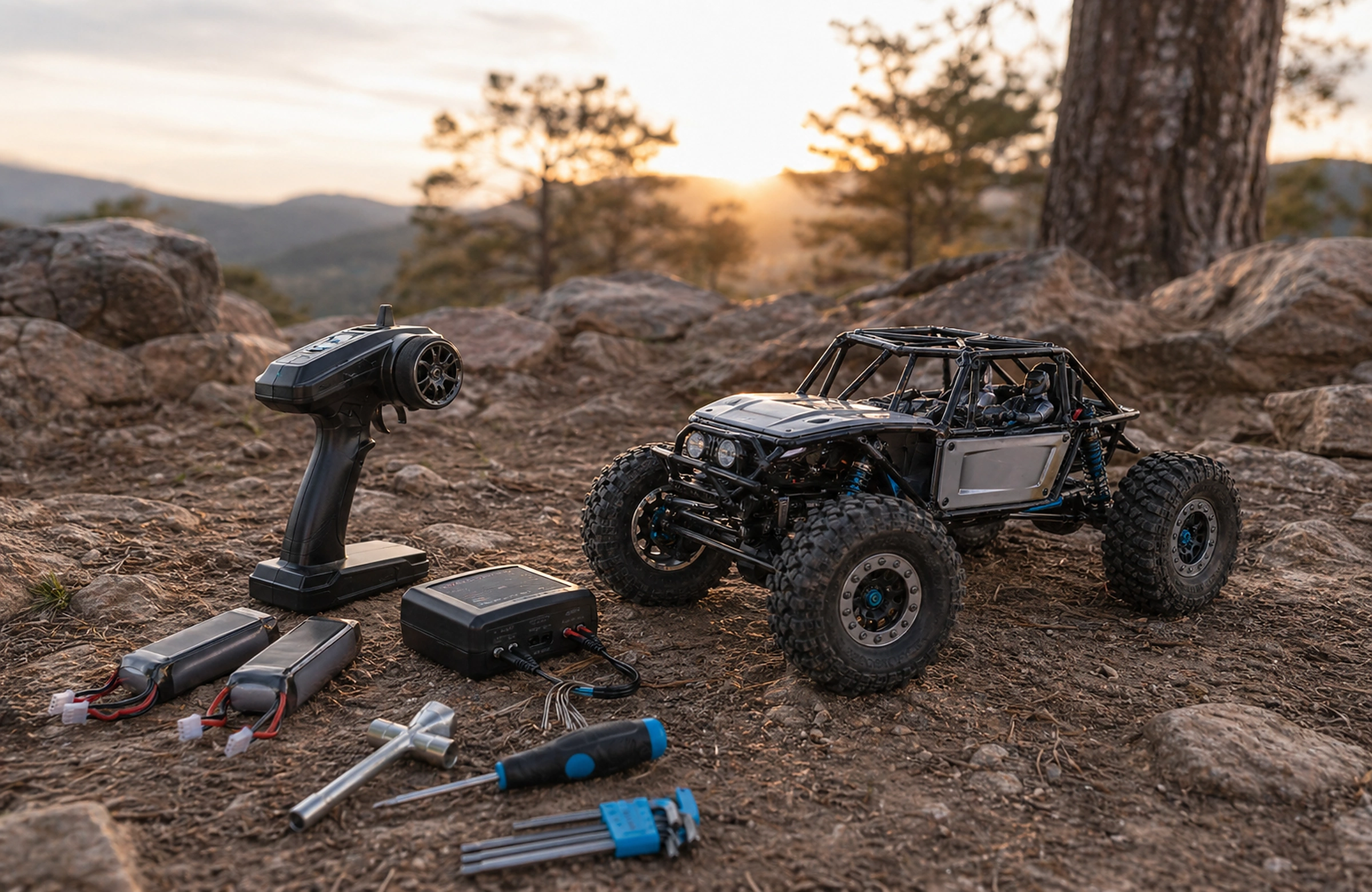
Start with a research path, not a cart
A first crawler decision gets easier when you sort the question into rig, terrain, parts category, seller/source evidence, and fitment risk. The goal is not to memorize every term. The goal is to know which facts need checking before price or popularity starts steering the decision.
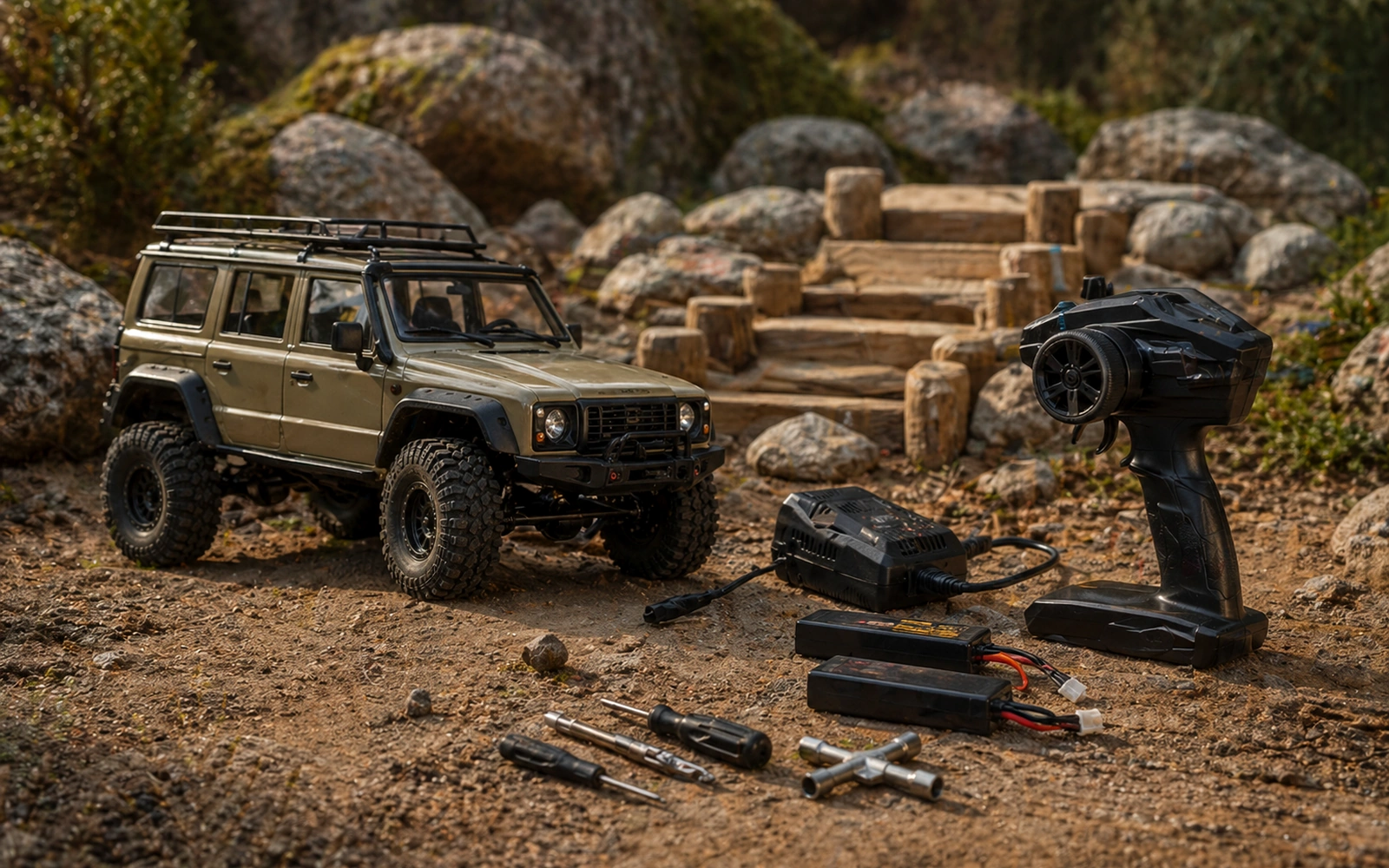
Rig and platform basics
Start by identifying scale, platform family, version, wheelbase, body, electronics layout, and existing modifications. A broad model name is useful, but parts still depend on generation, trim, axle style, servo format, battery space, and body clearance.
- Use platform paths when you know the rig family.
- Use search for exact SKU, MPN, body name, or part-number clues.
- Write down wheelbase, tire size, connector type, and servo details before comparing parts.
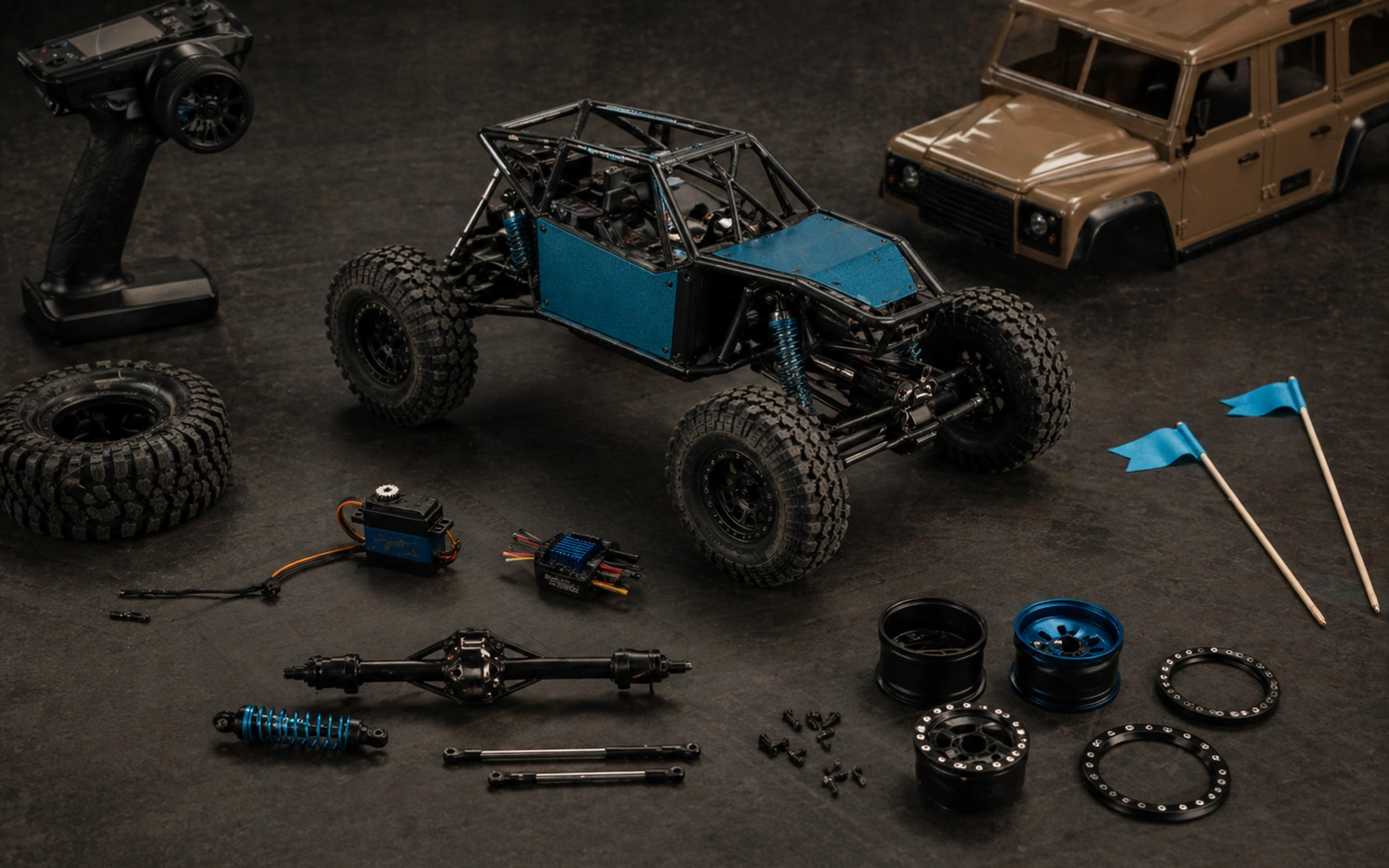
Turn terrain into category research
Terrain should point the first category search. Dusty rock, wet roots, loose dirt, indoor courses, and long walks ask different things from tires, foams, power, battery placement, and spares. Do not compare offers until you know the problem the part is supposed to solve.
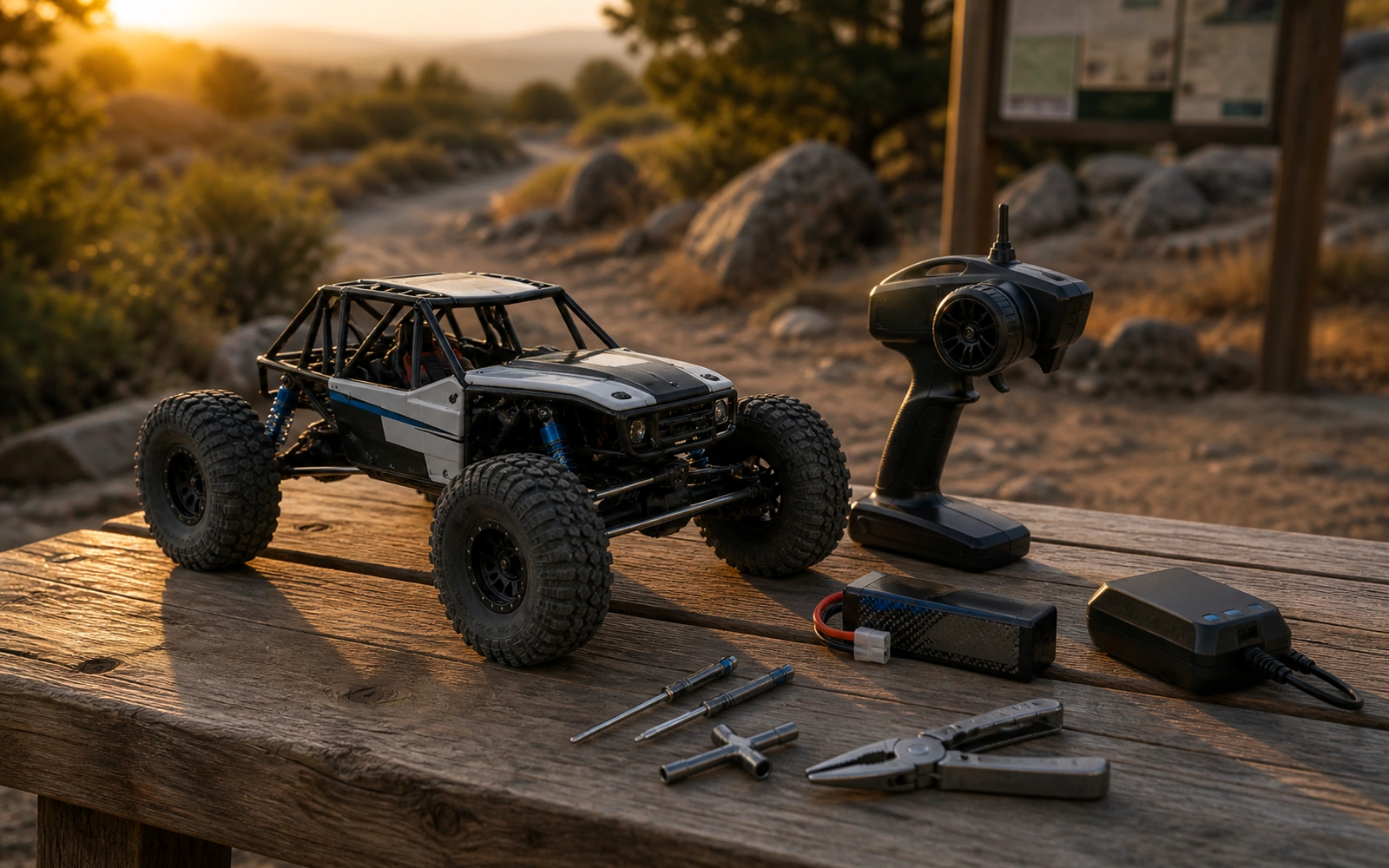
Use the first drive as data
A short practice run can save money. Watch whether the rig lacks grip, stalls steering, cuts power, tips on sidehills, drags the skid, rubs the body, or breaks hardware. Those symptoms become research terms for category browsing and SKU search.
Tire compound, foam support, wheel size, terrain, and rig weight.
Servo size, spline, horn, voltage, BEC support, and endpoint setup.
ESC/BEC rating, connector, receiver load, battery condition, and wire routing.
Tire outside diameter, wheel offset, wheelbase, body clearance, and trim notes.
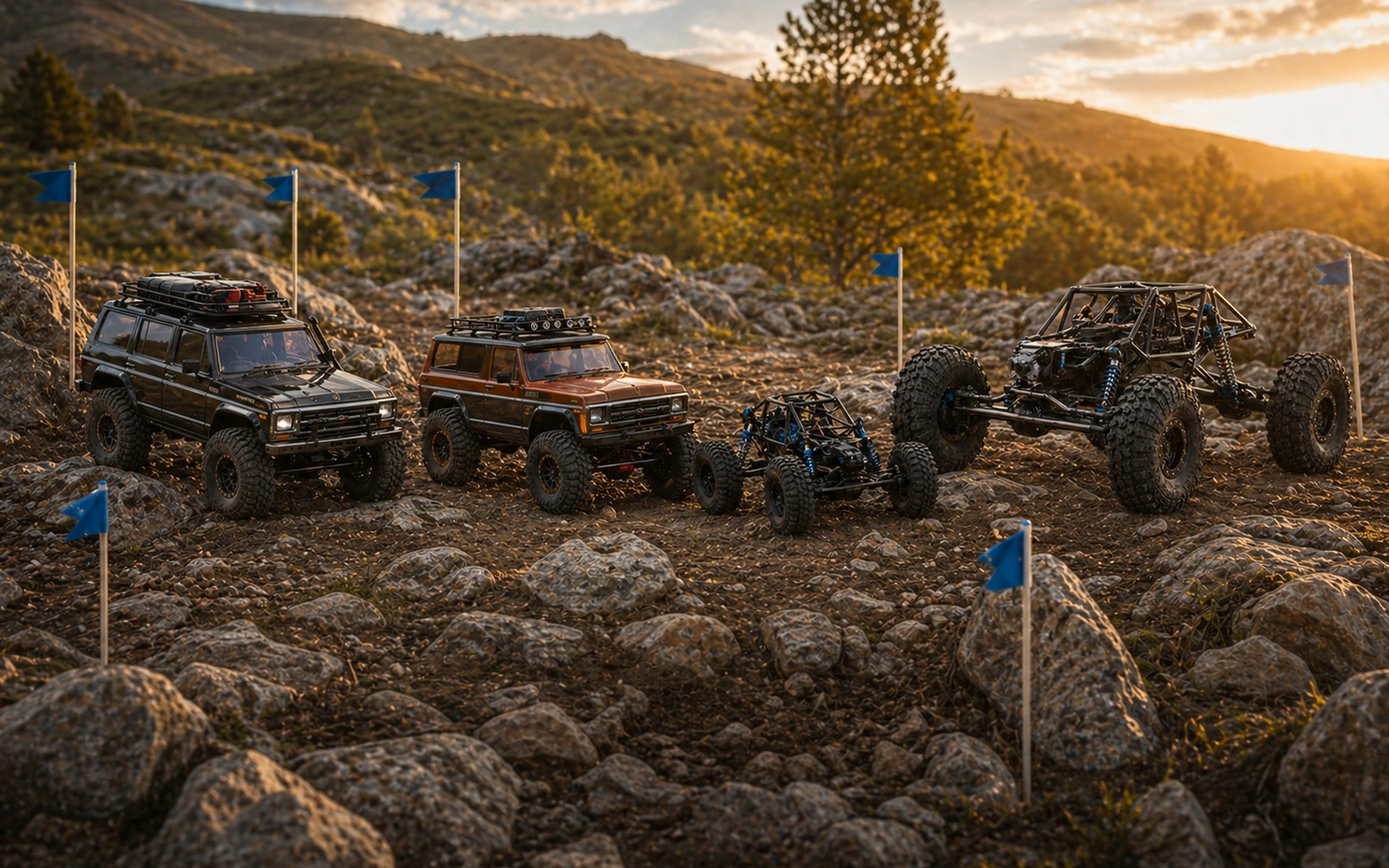
Seller and source checks
A marketplace result is a lead, not the final fact. Compare seller count, stock labels, price spread, product title, images, SKU or MPN, included hardware, and fitment notes. Then open the seller/source page to verify the current variant and terms before purchase decisions.
Whether the same part appears from multiple sellers or only one source.
Bundle, color, size, hardware, and variant differences before reading price as value.
Stock, shipping, support, return details, variant selector, and included hardware.

Keep a fitment note before buying
Before comparing offers, keep one note with the details that affect fit. It does not need to be fancy. It needs to prevent wrong-platform, wrong-voltage, wrong-size, and missing-hardware purchases.
- Platform, version, scale, body, wheelbase, axle style, and tire outside diameter.
- Servo size, spline, horn length, voltage, BEC need, and battery connector.
- SKU, MPN, seller source page, stock label, price range, and included hardware.
- Physical part versus digital file or STL when browsing printed parts.
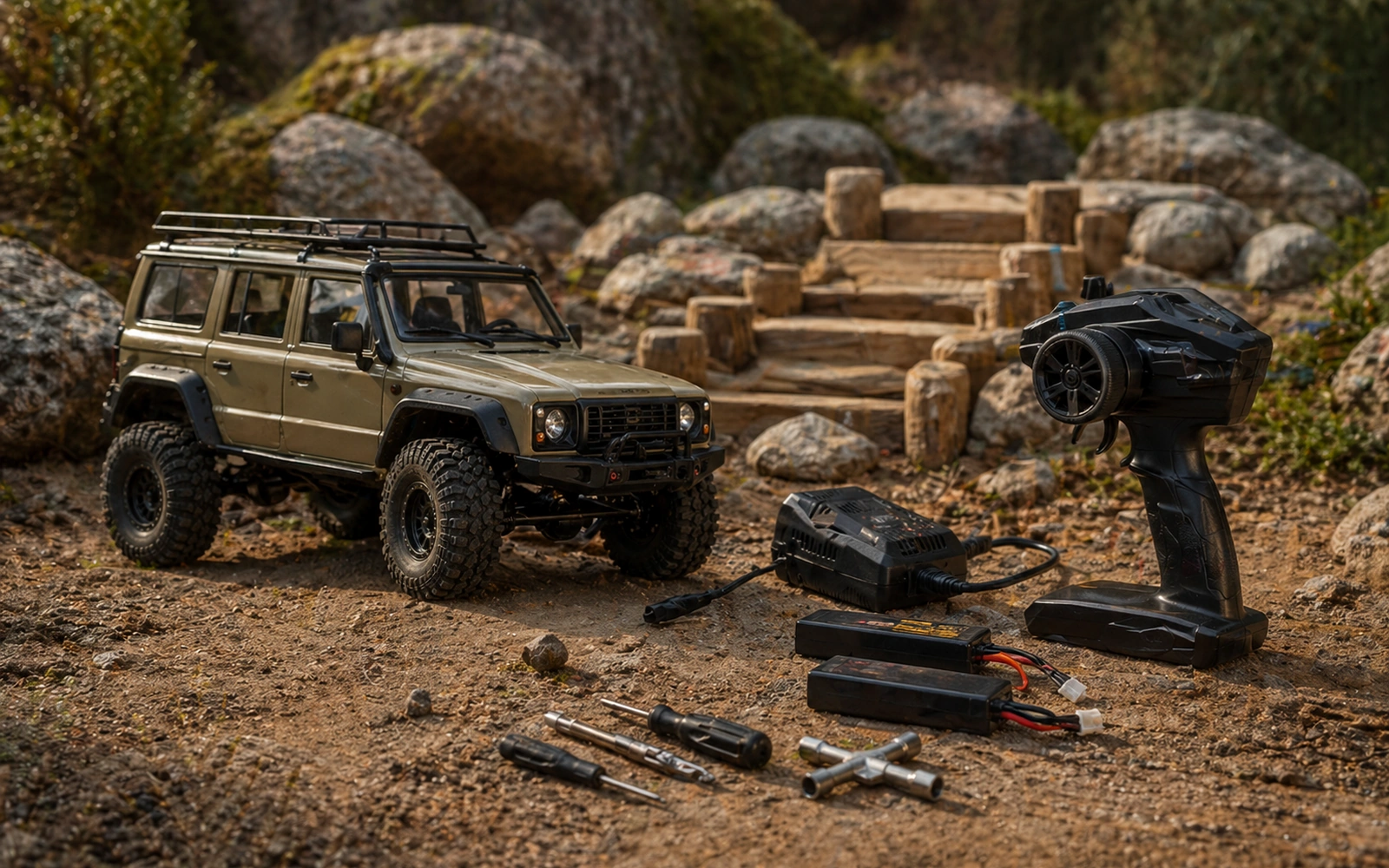
Research next
Use these routes once you know the rig, terrain, and symptom. They are research paths for comparing fitment evidence, seller/source detail, stock labels, and price range.