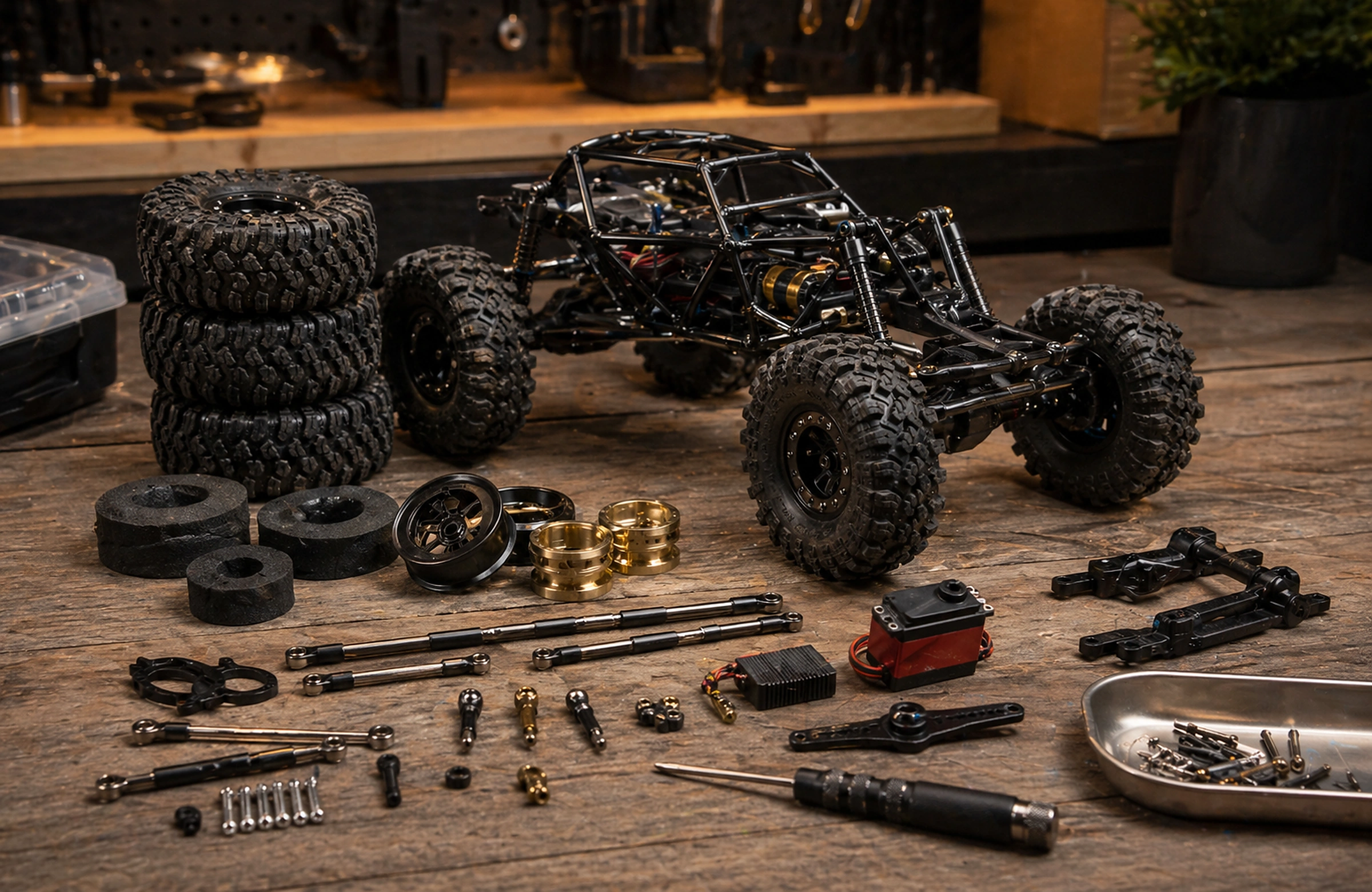
Symptom triage before parts
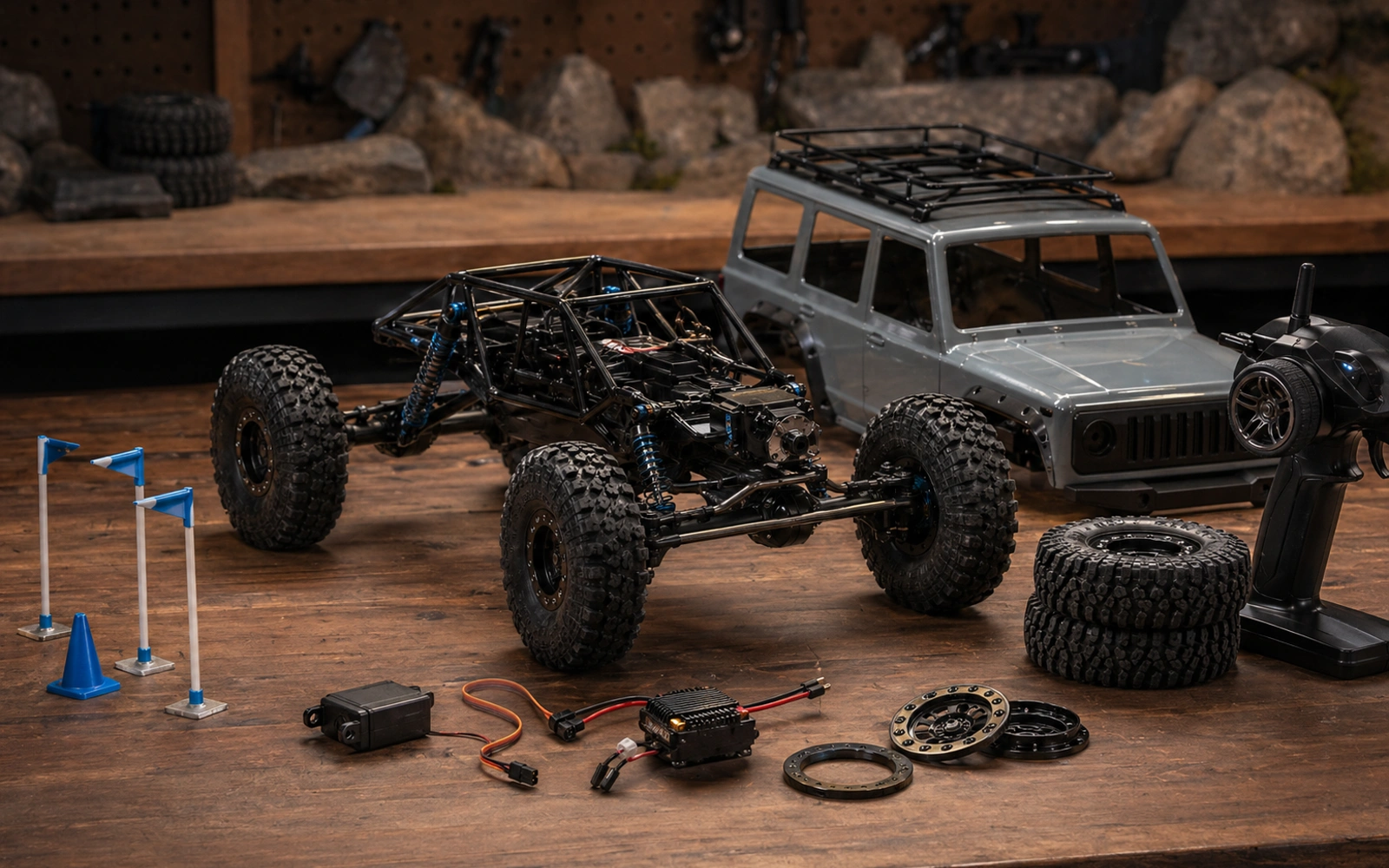
The first research step is naming what the rig does under repeatable conditions. Use the same obstacle, battery, tire setup, and line, then choose a category because it addresses that behavior, not because it looks popular.
- Low grip or tire fold: research tire compound, insert support, wheel size, rig weight, and local terrain.
- Weak steering under load: check servo size, spline, horn length, voltage, endpoint travel, and steering link condition.
- Brownouts or power cuts: compare ESC/BEC rating, receiver voltage, wiring quality, battery connector, and added accessories.
- Tippy climbs or sidehills: inspect battery position, wheel weight, clearance, shock setup, and line choice before adding more metal.
- Wheel or beadlock changes: verify hex size, offset, bead type, insert volume, and body rub.
- Frequent breakage: look for binding, loose hardware, worn bearings, driveshaft angle, and parts that need service before upgrades.
Category research paths
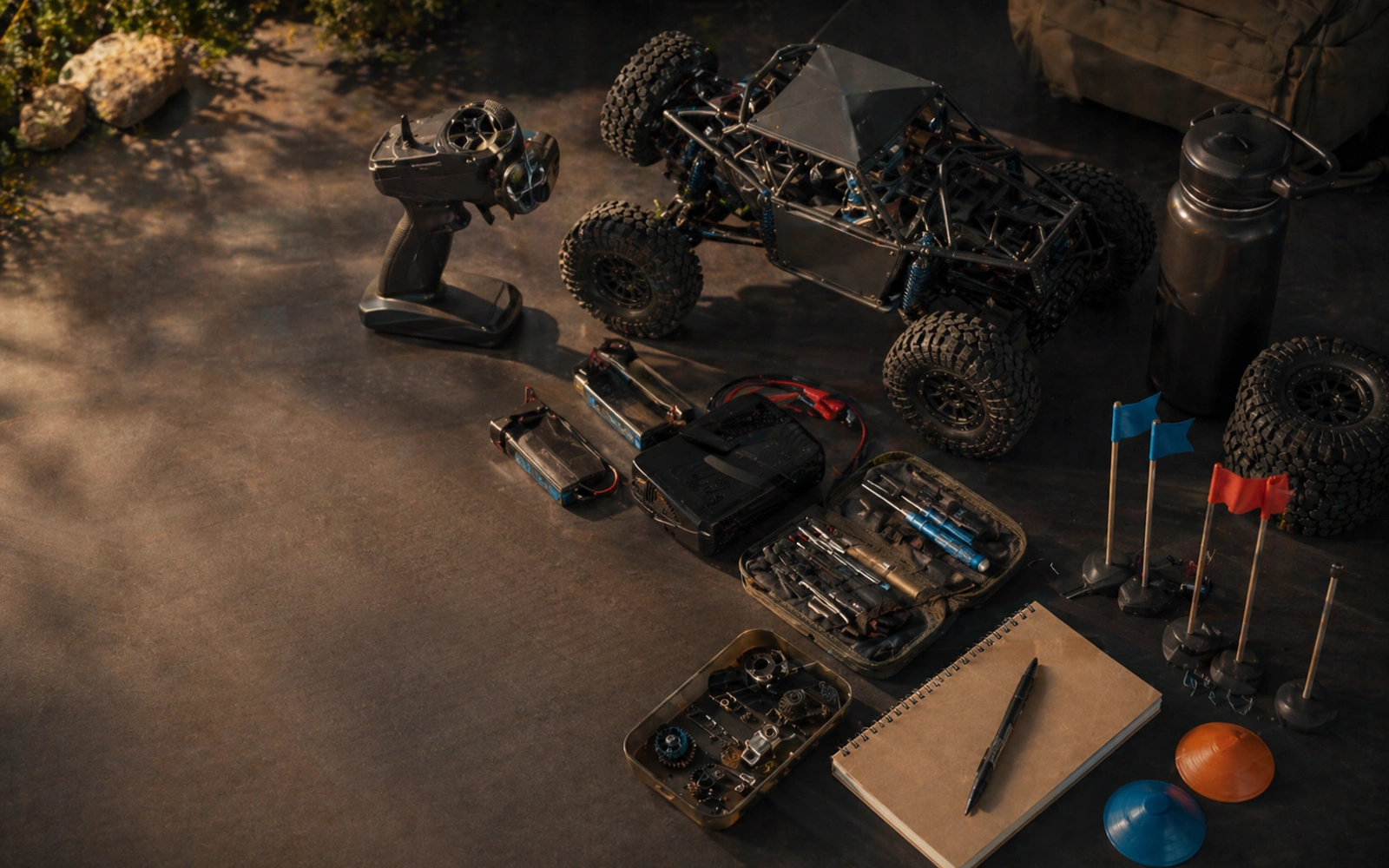
Once the symptom is clear, use the category path as a research lane. Compare dimensions, compatibility notes, SKU or MPN evidence, included hardware, seller count, stock state, and price spread before treating any listing as a candidate.
Steering and power research
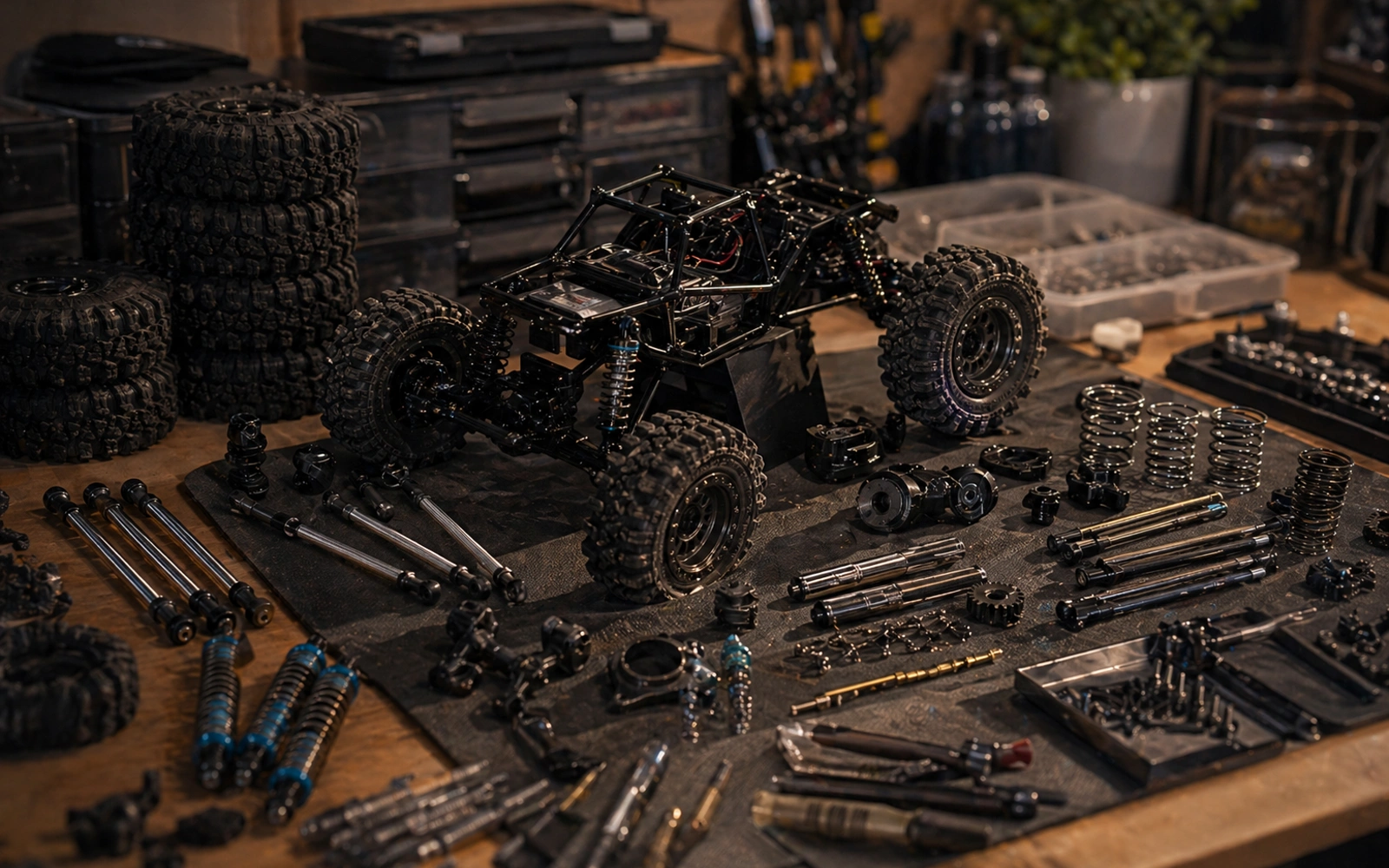
Steering complaints often involve more than torque. Confirm servo dimensions, spline count, horn clearance, endpoint setup, receiver voltage, and whether a BEC is part of the plan. For power cuts, research the full chain: battery connector, ESC limits, receiver load, lights, winch, and wire routing.
Weight, wheels, and reliability
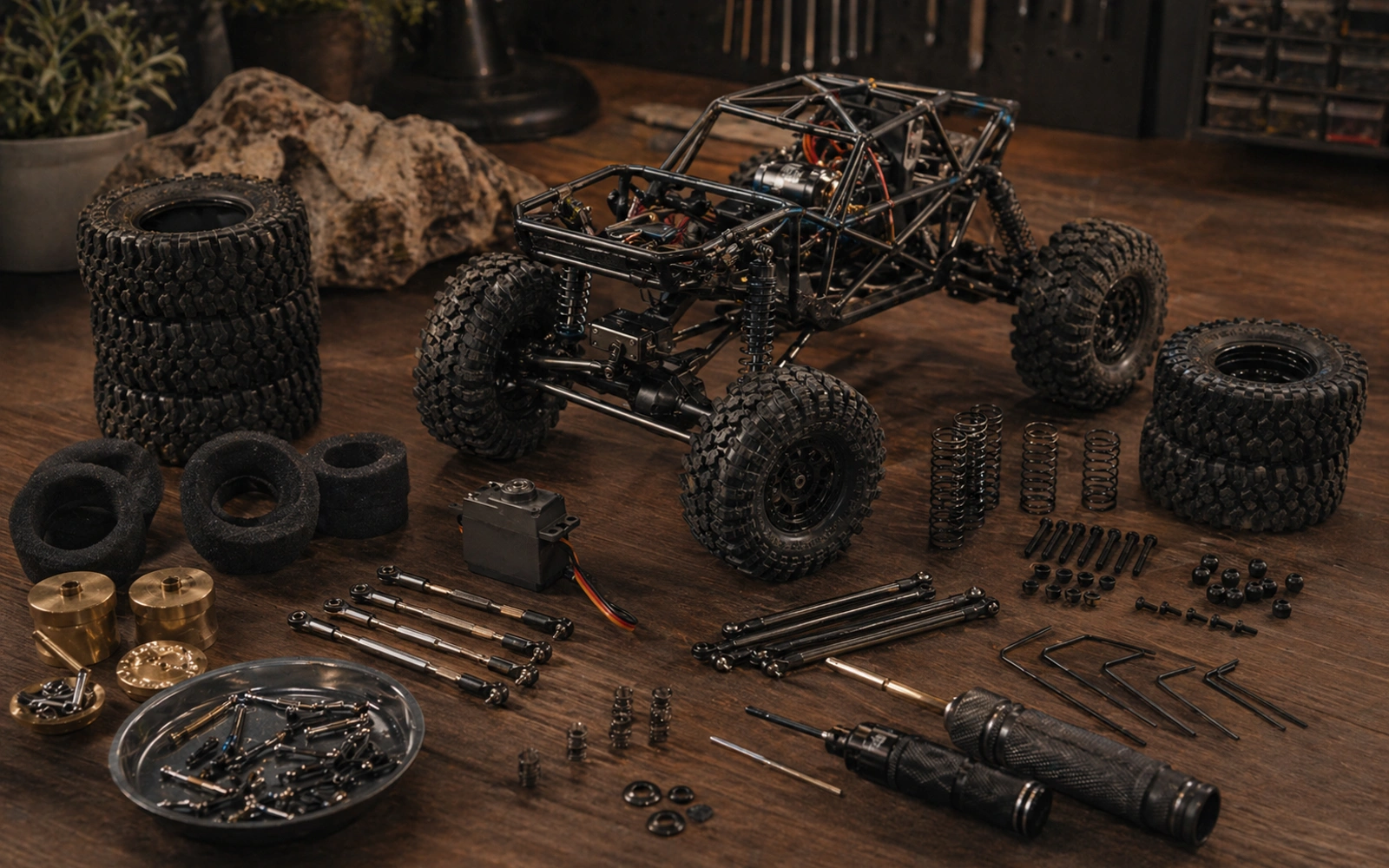
Weight can change how a crawler climbs, steers, and breaks parts. Research whether the symptom points to lower front bias, wheel and foam support, battery placement, or a service issue. If the truck is already binding, loose, or rubbing, more weight can hide the cause for a few runs and add stress elsewhere.
Fitment checks before comparing sellers
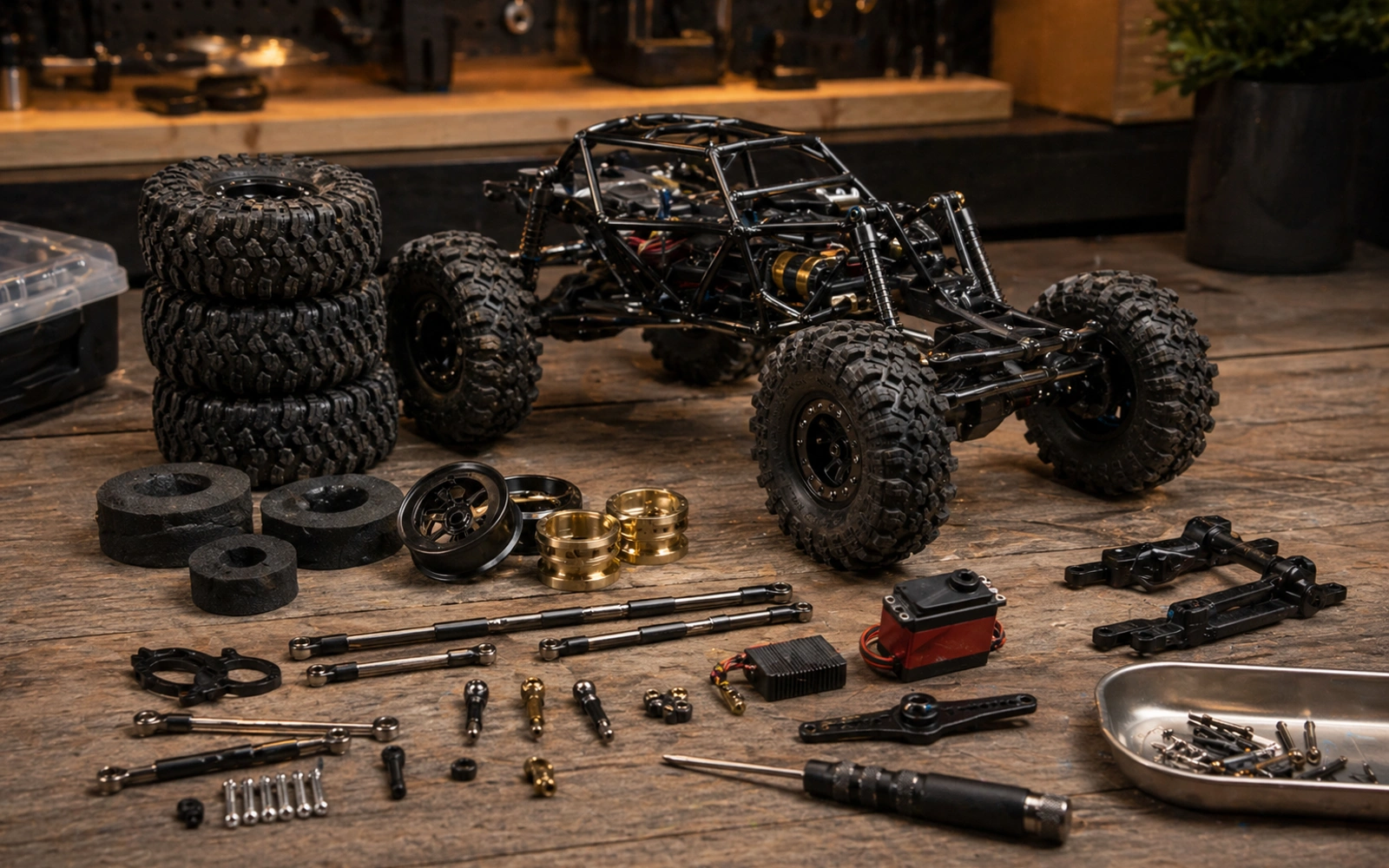
Fitment is where many useful parts become expensive guesses. Record the exact rig, version, body, wheelbase, existing modifications, and source-page identifiers before comparing offers.
- Platform and version, including generation, scale, axle style, and previous-owner changes.
- Tire size, compound, insert support, wheel diameter, wheel width, and intended terrain.
- Servo size, spline count, horn length, voltage range, mount pattern, and endpoint travel.
- BEC need, ESC rating, receiver voltage, battery plug, accessory load, and wire path.
- Wheel hex, offset, bead style, included hardware, and body or link clearance.
- Battery connector, tray space, body clearance, SKU, MPN, and merchant source page.
Use one repeatable research loop
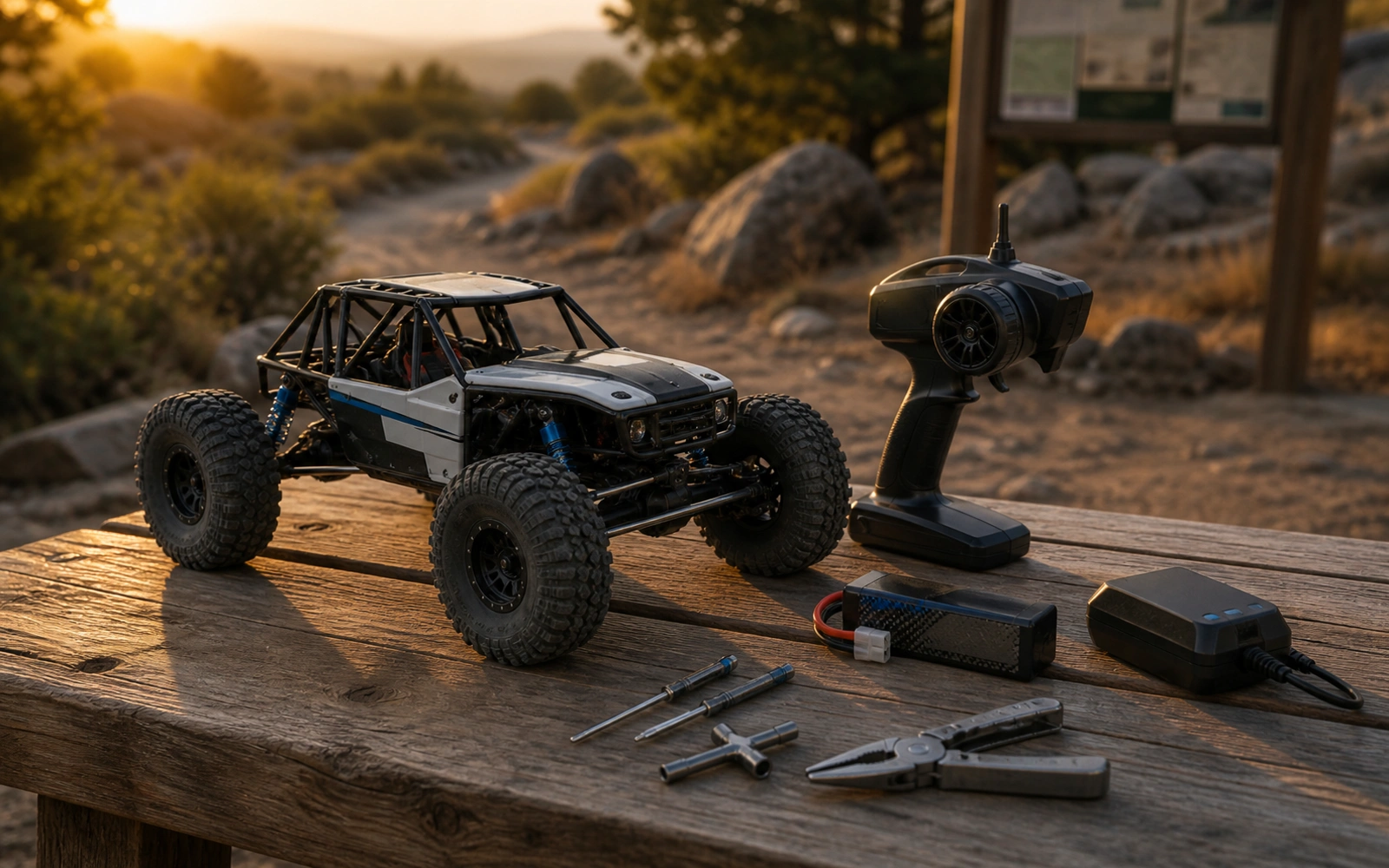
Drive the same obstacle, write down the symptom, pick one category, compare source evidence, and verify the part details against your rig. Then change one thing and test again. That loop keeps the purchase tied to a specific problem.
- Name the symptom in one sentence.
- Choose the category that addresses that symptom.
- Search by platform, SKU, MPN, or exact part family when available.
- Compare seller coverage, stock labels, price spread, and source-page detail.
Research next

Use these paths after the symptom and fitment notes are clear. They are research shortcuts into the marketplace, not product recommendations.