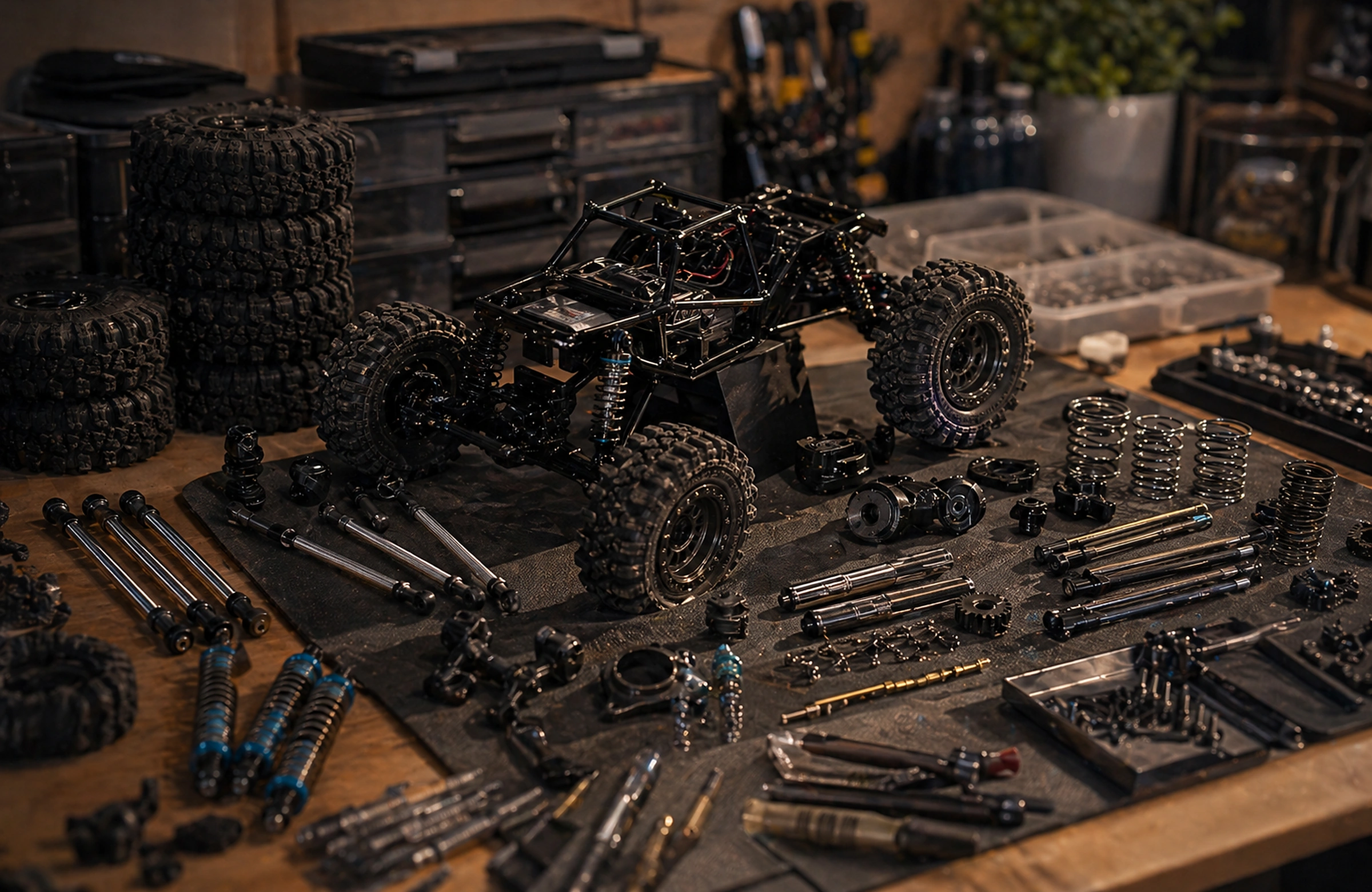
Compatibility trap board
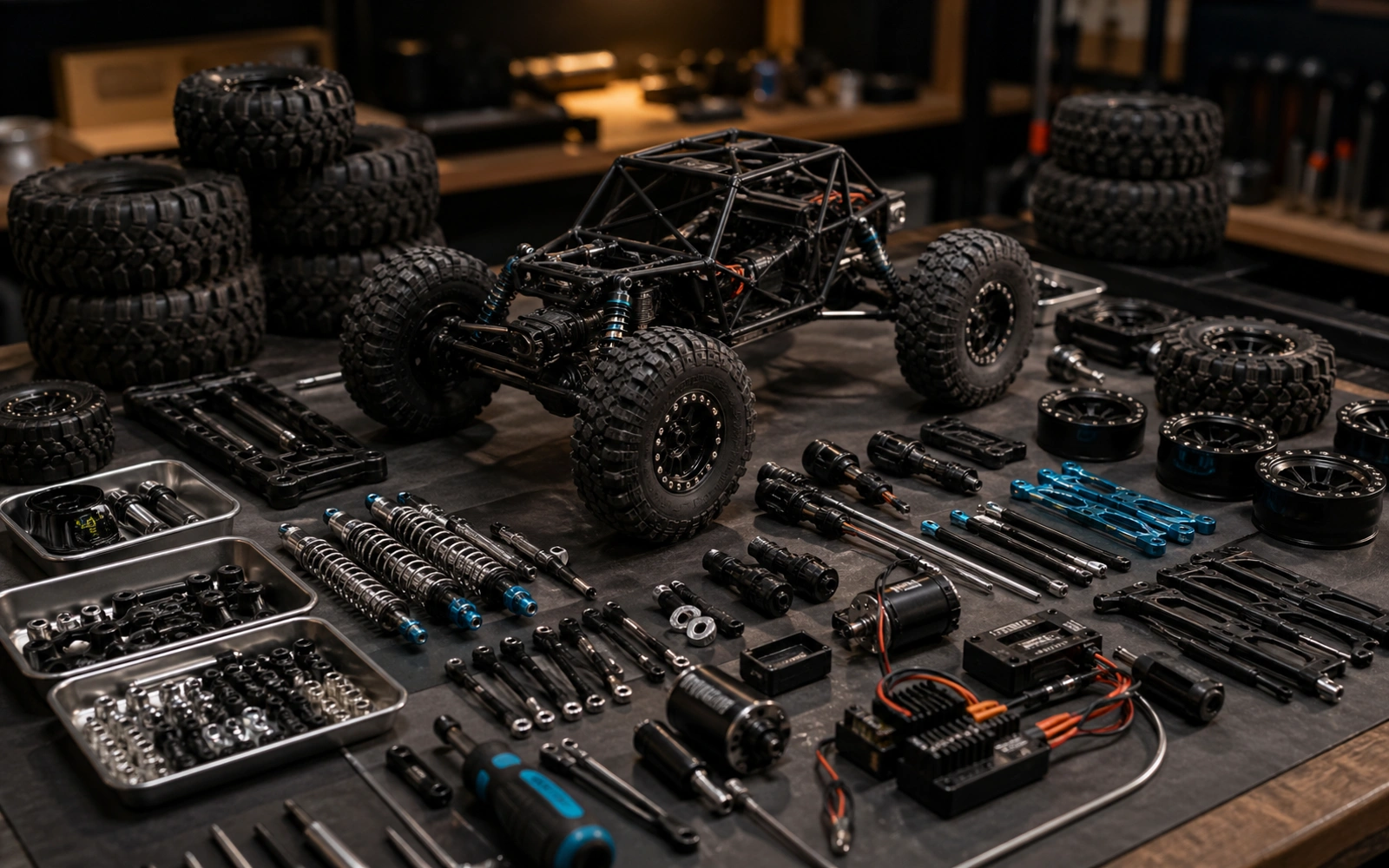
Compatibility problems hide in details that sound small until the package is on the bench. Treat the platform name as the start of the search, then verify the version, dimensions, source page, and physical format.
- Platform name is not fitment: confirm the exact rig family, generation, scale, axle style, and trim.
- Version mismatch: look for notes that separate SCX10, SCX10 II, SCX10 III, TRX-4, TRX-4M, Capra, UTB10, and UTB18-style variants.
- Body, wheelbase, and clearance assumptions: measure tire rub, bumper position, link length, driveshaft angle, and body trim.
- Servo mismatch: check case size, spline count, horn length, voltage range, mount pattern, and endpoint travel.
- Electronics chain mismatch: verify ESC/BEC limits, receiver voltage, connector type, battery plug, lights, winch, and wire routing.
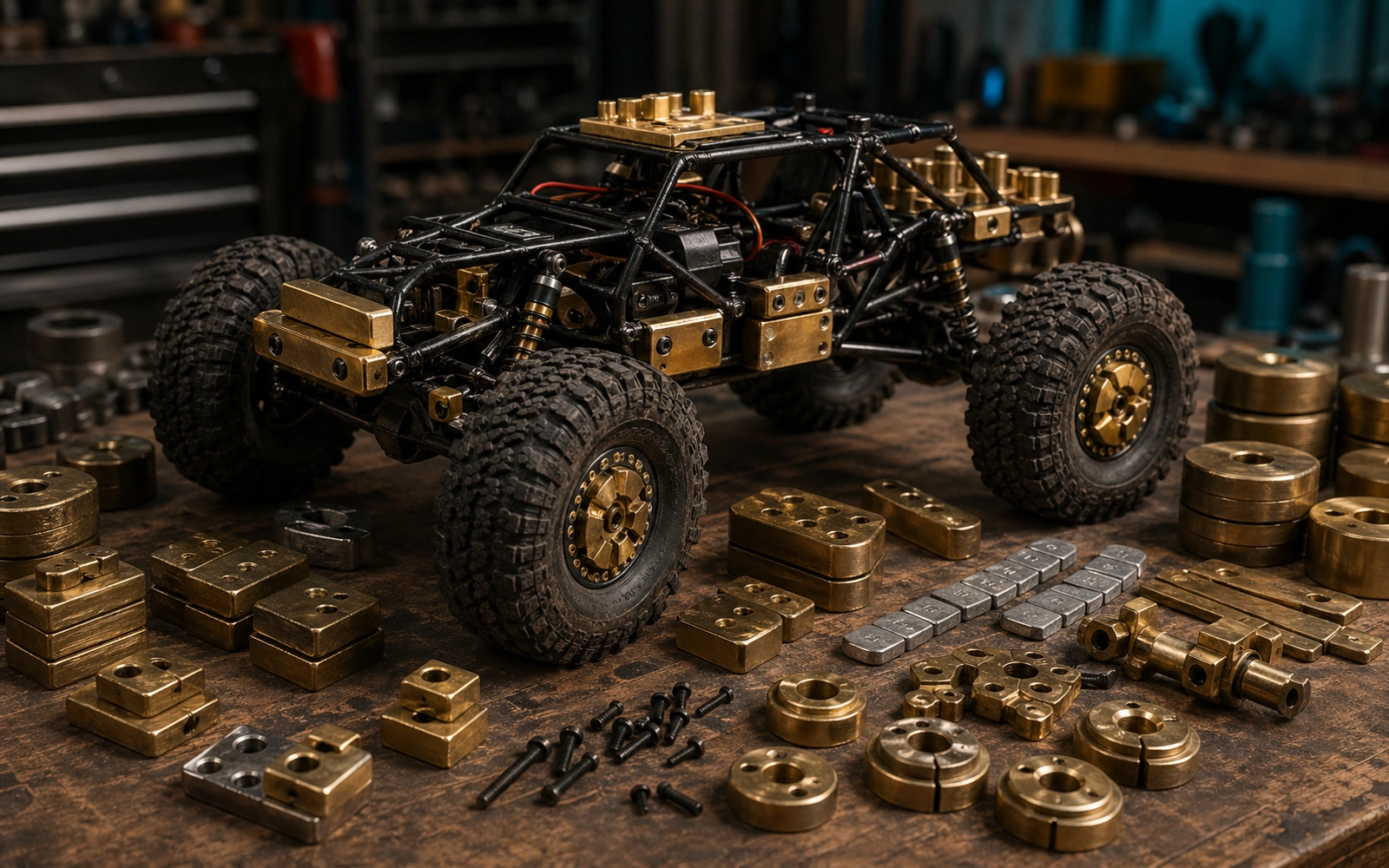
- Weight added without testing: compare the symptom against tire, foam, suspension, and line-choice evidence before adding metal.
- Tires and foams ignored: match compound, insert support, wheel width, diameter, terrain, and total rig weight.
- Event or class rules checked late: read current organizer notes before buying class-defining tires, bodies, chassis, or electronics.
- Digital file mistaken for a part: confirm whether the listing is STL, printed part, hardware kit, license, or source file bundle.
Decision matrix for bad-purchase prevention

Use each mistake as a research question. The goal is to catch the likely failure before the cart becomes a repair project.
Mount holes, links, axles, or body clearance do not match.
Verify before buyingExact platform, generation, source-page fitment notes, SKU, and MPN.
Weak steering, brownouts, stripped horns, or wiring heat.
Verify before buyingSpline, case size, voltage, BEC need, ESC limit, connector, and accessory load.
Folded sidewalls, poor bead seating, body rub, vague steering, or unstable climbs.
Verify before buyingTire diameter, wheel width, bead type, insert support, hex, offset, and clearance.
Wrong variant, missing hardware, stale stock label, or unclear return path.
Verify before buyingMerchant source page, seller count, stock state, price spread, included hardware, and support notes.
Offer and source checklist
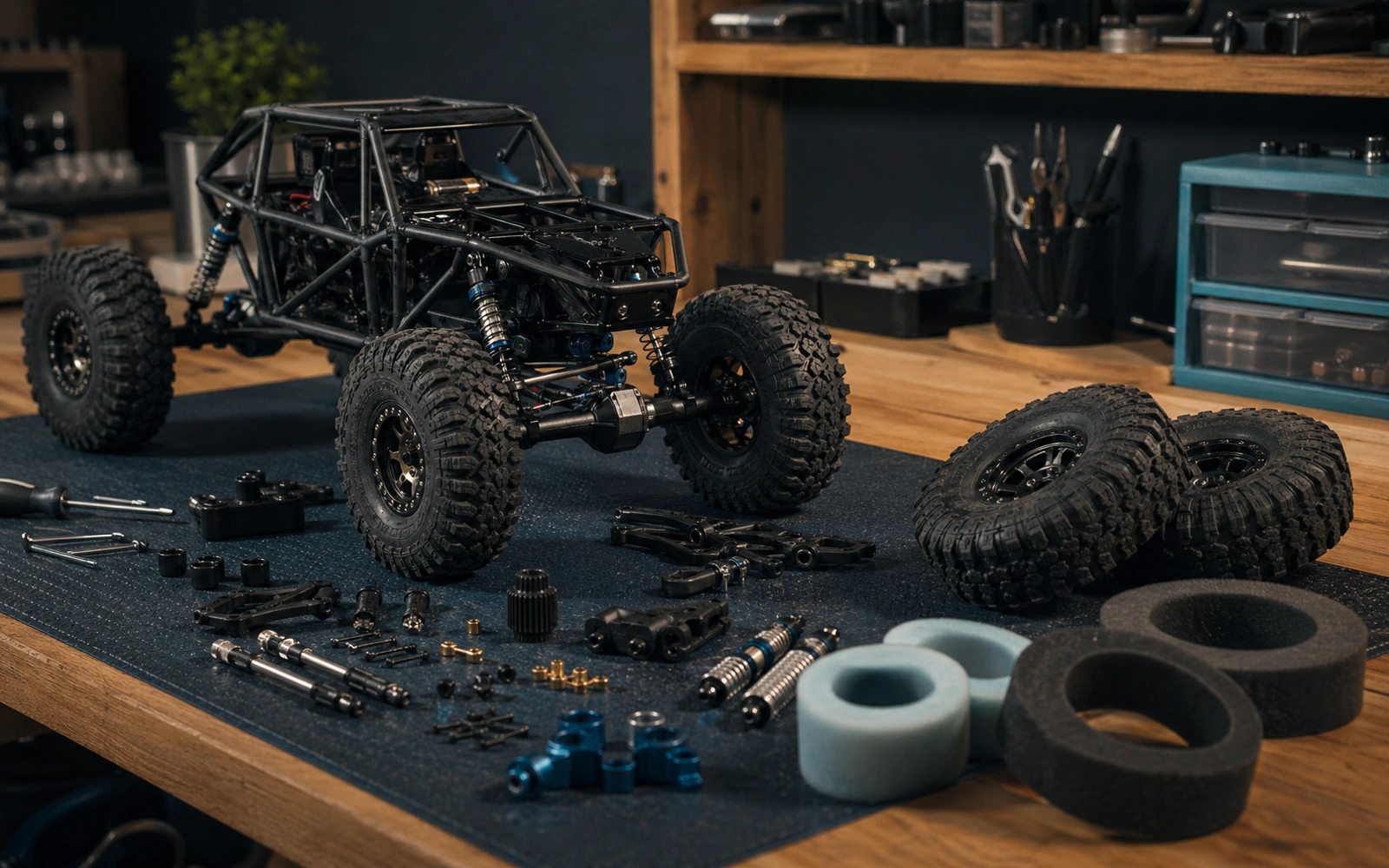
A parts page is stronger when its evidence lines up across the marketplace result, the merchant page, and your own rig notes. Check the source before treating price or availability as purchase-ready.
- SKU or MPN, including punctuation, suffixes, color codes, and bundle names.
- Merchant source page with clear title, fitment notes, photos, variant selector, and included hardware.
- Seller count for the same part or close equivalent, not just a broad keyword match.
- Stock state on the marketplace result, then confirmation on the merchant page.
- Price spread across sellers, including whether a low or high listing reflects a bundle, kit, color, or variant.
- Included hardware, bearings, links, horns, spacers, adapters, or printed parts.
- Return, support, warranty, or install-note signals on the source page.
- Digital versus physical format, including file license, printed-part material, and required hardware.
Digital file and physical part format
An STL, CAD bundle, printed part, hardware kit, and installed upgrade are different things. For digital files, start from the creator or approved source page, read the license, check material and orientation notes, and confirm hardware before printing.
Class, body, and fitment timing
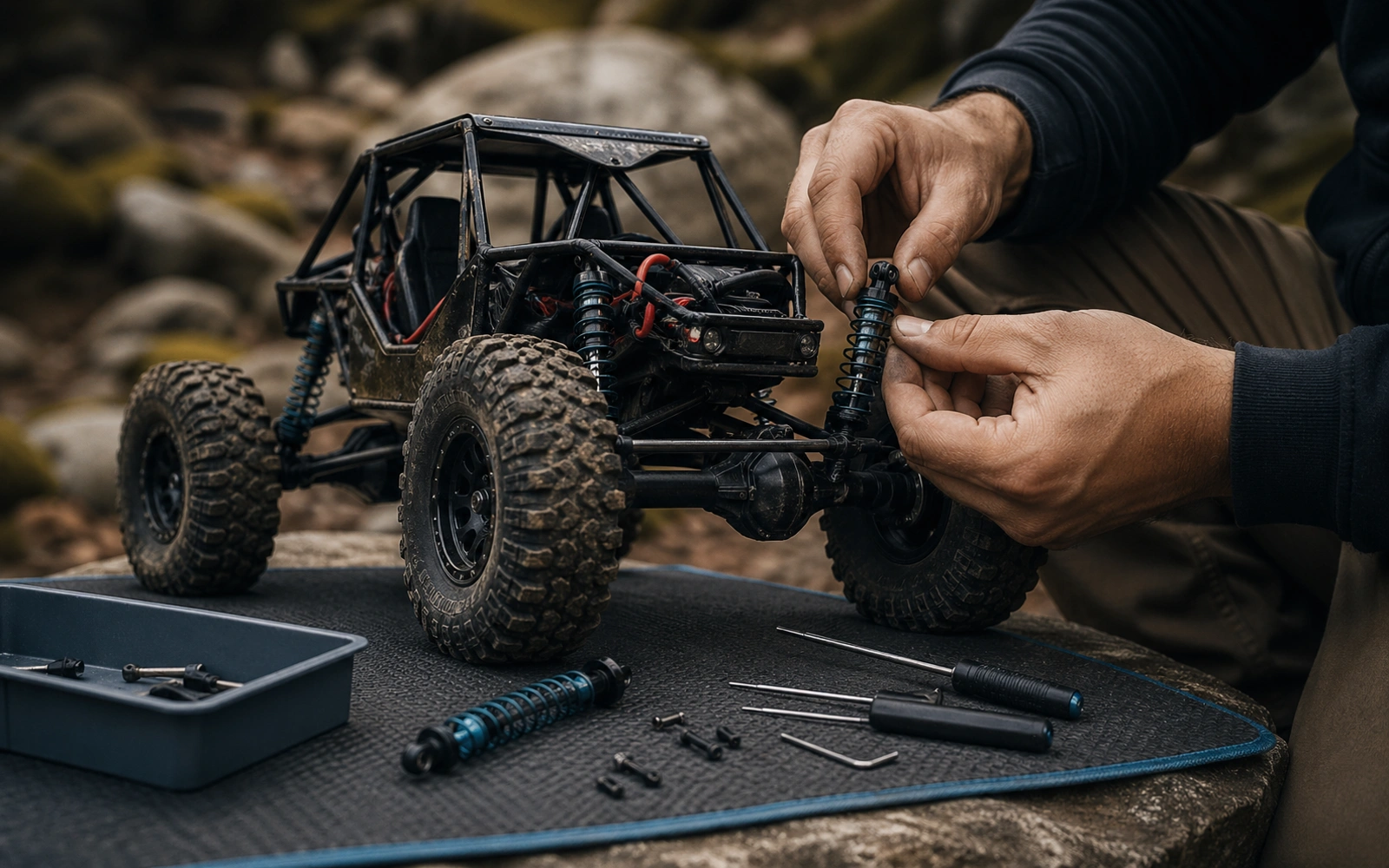
Class rules, body trim, tire size, wheelbase, portal axles, dig, four-wheel steer, battery placement, and scale points can affect whether a build fits the event or the local group. Read the current organizer source before buying parts that define the build.
Run the compatibility loop

Start with the rig and the problem, then search by exact platform, category, SKU, MPN, or source phrase. Compare the marketplace result with the merchant source page and your measurements before buying.
- Write down the platform, version, body, wheelbase, tire size, electronics, and known modifications.
- Use search for exact identifiers before broad keywords.
- Use category paths when the symptom is clear but the part number is not.
- Open the source page and check variant, stock state, price, hardware, support notes, and format.
Research next

Use these paths to verify the rig, part category, source quality, and editorial standards behind a decision. They are research lanes, not product endorsements.