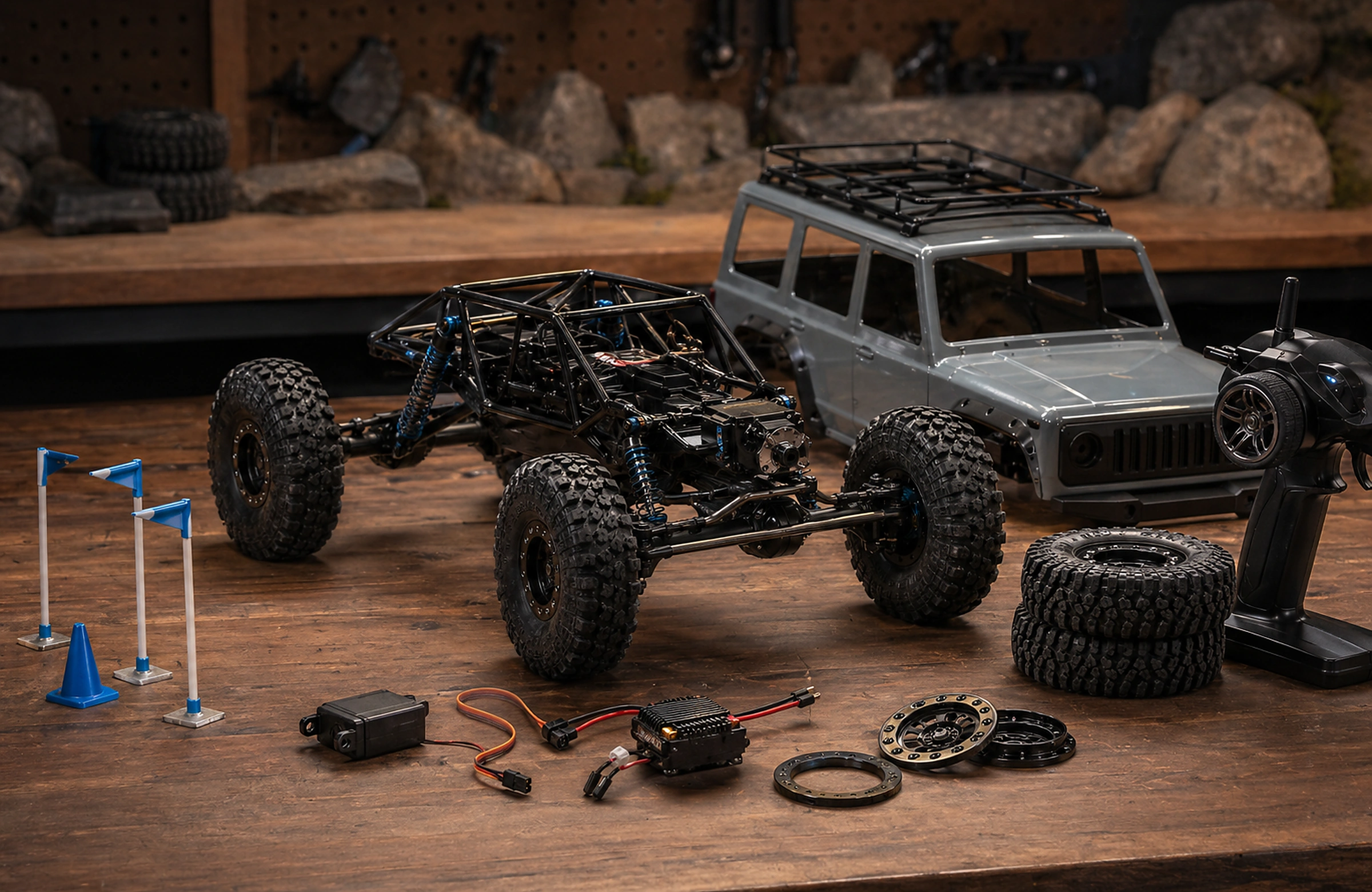
How to read crawler terms

Crawler language often sounds precise because small setup changes matter. A term can also mean slightly different things in a trail group, a scale meet, a micro event, and a performance competition. Use these definitions to understand the conversation, then verify class-specific meanings with current organizers when the term affects legality or scoring.
Rig parts and geometry
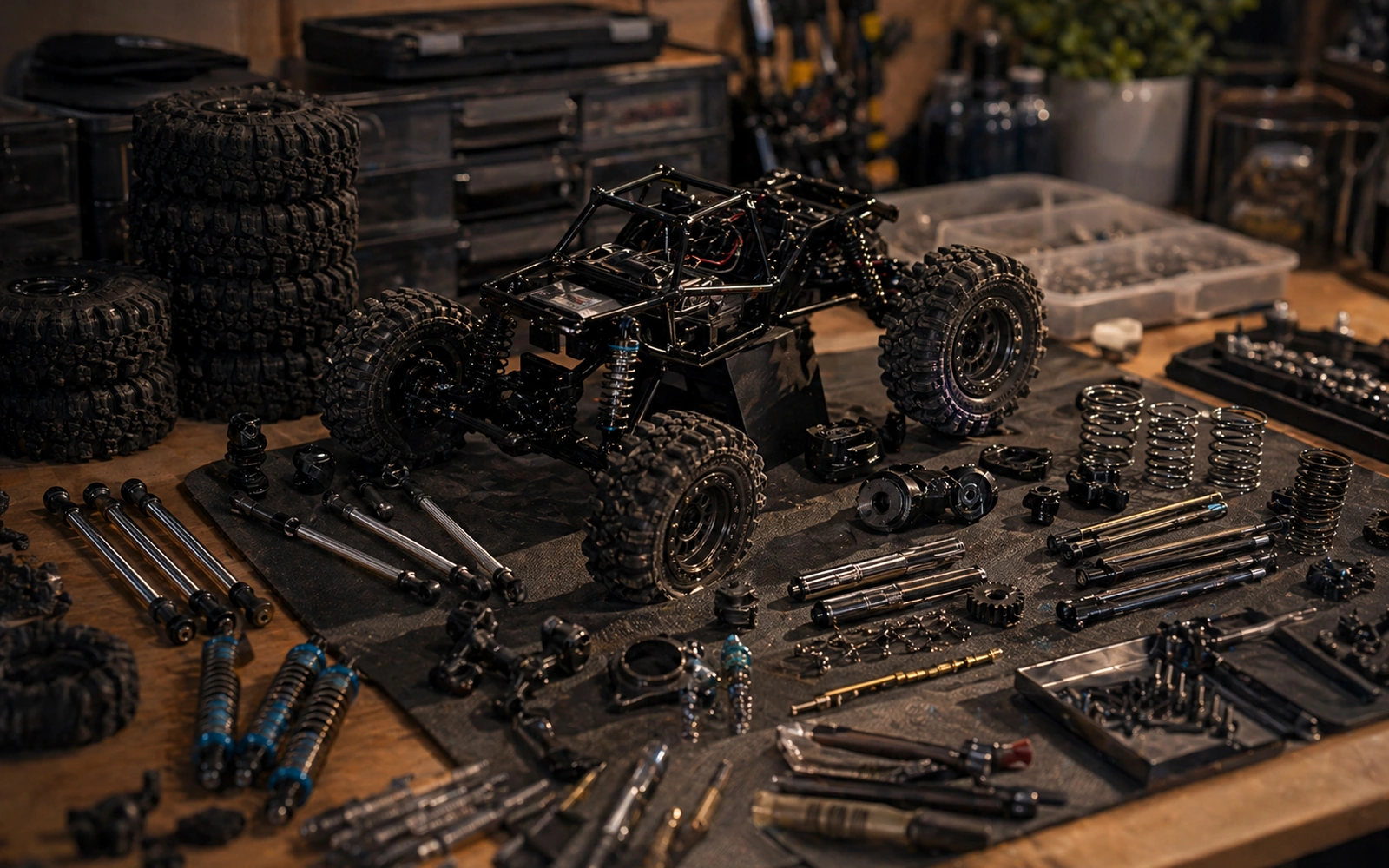
These words describe the physical truck: body, axle, skid, links, wheels, tires, and the angles that decide whether the rig clears an obstacle. Geometry terms are useful before shopping because they explain why a part can help one build and hurt another.
- Approach angle: How steep a ledge the front of a crawler can meet before the bumper or body hits first.
- Breakover angle: The clearance around the center skid that helps a rig crest a rock without hanging up.
- Departure angle: The rear clearance that matters when the back of the rig leaves a steep obstacle.
- Axle pumpkin: The center housing on an axle where gears sit; it often catches on rocks before tires do.
- Beadlock wheel: A wheel that clamps the tire bead mechanically, making tire changes easier and glue unnecessary.
- Foam insert: The support inside a crawler tire that controls sidewall fold, rebound, and weight handling.
- Compound: The rubber feel of a tire; softer compounds can grip well but may wear faster or fold more.
- Unsprung weight: Weight on axles, wheels, and tires that moves with suspension rather than the chassis.
- Sprung weight: Weight carried by the chassis and suspension, such as battery, body, electronics, and accessories.
- Low center of gravity: A setup goal that keeps mass lower so the rig resists tipping on sidehills and climbs.
- Overdrive: A gearing choice that makes the front axle turn slightly faster than the rear for sharper climbing behavior.
- Underdrive: A gearing choice that makes the rear axle turn slower to calm rear push and improve technical control.
- Drag brake: ESC braking that slows or holds the truck when the throttle returns to neutral.
Electronics and setup
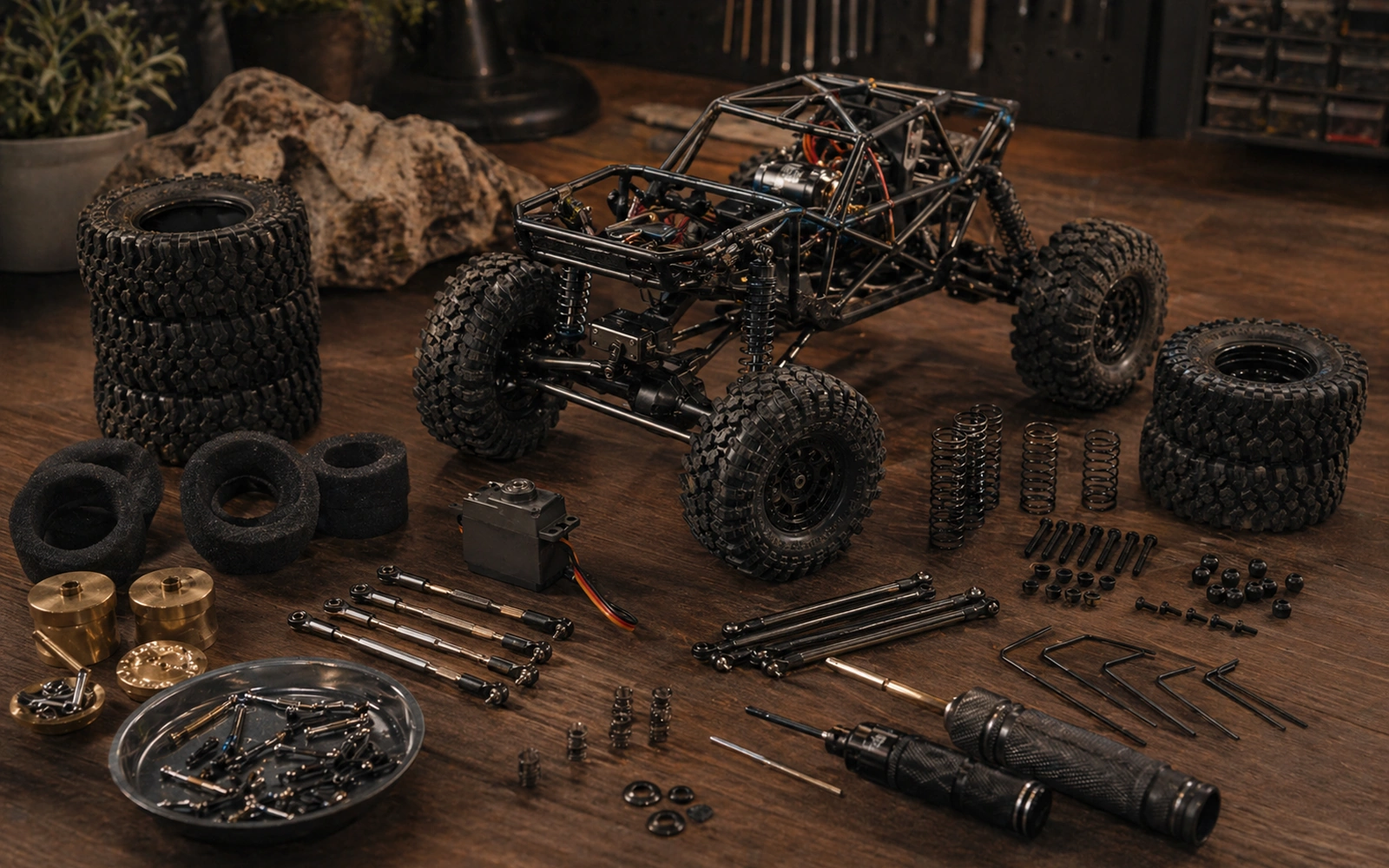
Electronics terms usually connect to control. A crawler is slow, but the servo, ESC, radio, battery, and BEC decide whether slow driving feels calm or frustrating. Setup words also help you diagnose problems before buying another upgrade.
- BEC: A voltage regulator that supplies electronics like the receiver and steering servo.
- Servo torque: The steering force a servo can deliver; more torque helps tires turn under load.
- Spline count: The tooth count on a servo output shaft; servo horns must match it.
- Link geometry: The relationship between suspension links, skid, axle, and wheelbase that affects squat and clearance.
- Wheelbase: The distance between front and rear axle centers; rules and bodies often depend on it.
- Track width: The side-to-side tire stance measured across the rig; it affects stability and gates.
- Sidehill: A sideways slope where balance, tire support, and smooth steering matter.
Trail and course language

Trail and course terms turn a pile of rocks into a plan. They help drivers talk about line choice, recovery, gates, progress, and penalties without stopping the whole group for a long explanation.
- Gate: Two markers a rig must pass between on a course, usually in a specific direction.
- Progress: Credit for completing part of a course, commonly tied to cleanly clearing gates.
- Reverse: A backward movement; many events count reverses as penalties, but details vary.
- Boundary: A course edge or marked limit; touching or crossing it may carry penalties.
- Rollover: A tip-over event; rules differ on whether self-recovery, hand-of-god, or penalty recovery applies.
- Tech inspection: A pre-run check where organizers confirm the rig fits the class and event rules.
- Class 0: An entry-oriented micro class in RCMCCA context; local clubs decide whether to offer it.
Classes and scoring words
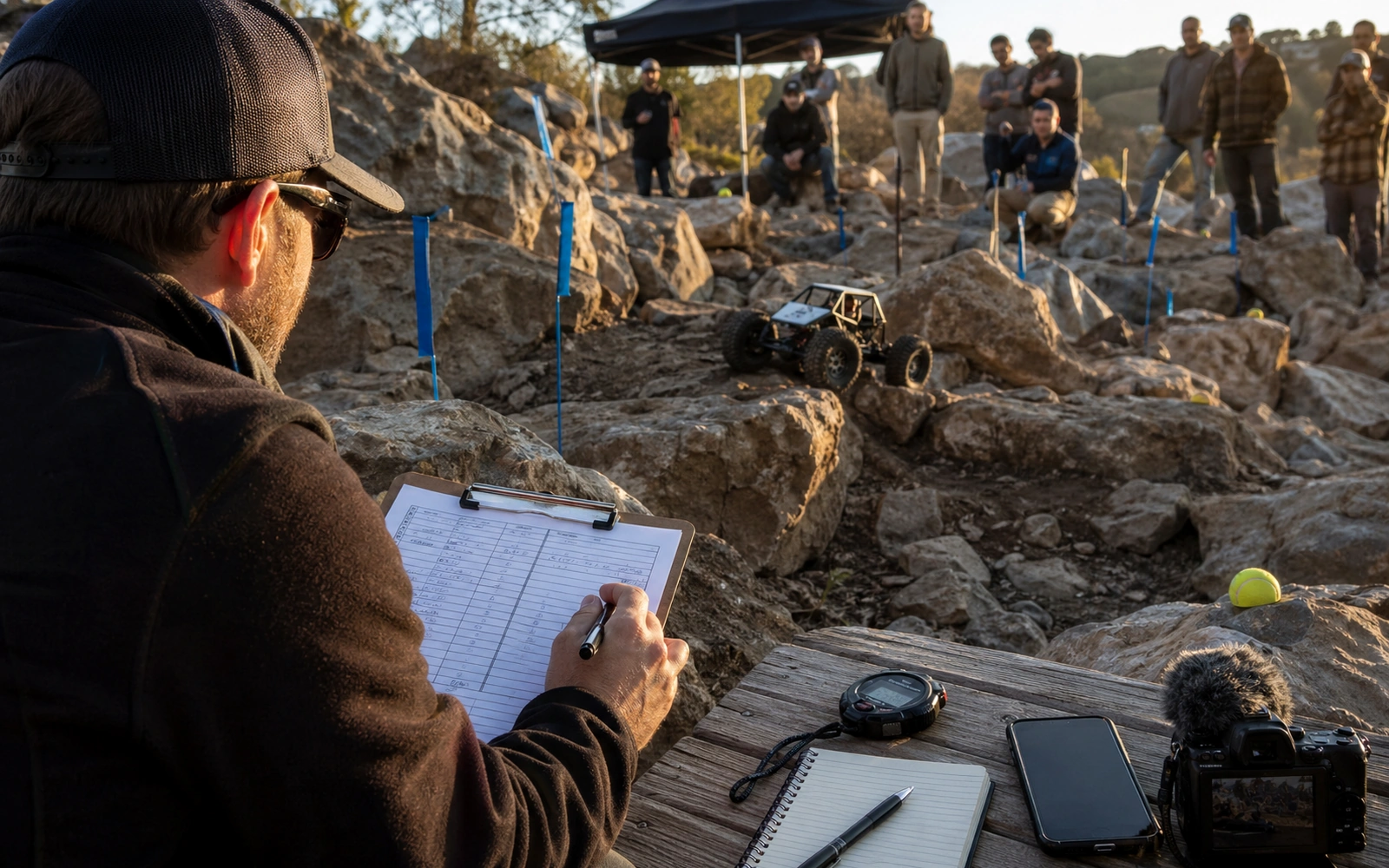
Class names belong to rule sets and organizers, not to a universal dictionary. Use these entries as orientation only. If a build must pass tech inspection, read the current rulebook and ask the event host before you buy class-defining parts.
- Class 1: A more scale-limited RCMCCA micro class with body, chassis, bumper, tire, and gate expectations.
- Class 2: A RCMCCA micro class with more build freedom than Class 1 but still defined limits.
- Class 3: A more open RCMCCA micro class aimed at higher-performance builds.
- Hardbody: A body made from hard plastic, styrene, printed material, or similar rigid material rather than lexan.
- Performance scale: A competition style that blends scale appearance expectations with performance-minded crawler setup.
- Sportsman: A competition class name often associated with simpler steering or drivetrain limits; verify the active rule set.
- Super: A large, specialized competition crawler class name; confirm current dimensions and equipment rules.
- Mini: A smaller competition crawler class name, often separate from micro and 1/10 trail categories.
- Pro: A high-performance competition class name where advanced steering and purpose-built layouts may appear.
- Scale points: Credit or requirements tied to realistic details; exact systems vary by organizer.
- Hardline: The risky but direct route through an obstacle, usually chosen to save time or points.
- Bonus gate: An optional or additional obstacle that may affect scoring depending on event rules.
- Line choice: The planned path through an obstacle, including tire placement and exit angle.
Digital and workshop terms

3D printing and workshop words matter because a file that looks simple online still needs material choices, printer settings, hardware checks, and license awareness. Treat printable parts like parts that require fitting, not magic replacements for setup time.
- STL file: A common 3D model file format used for printable RC crawler parts and accessories.
- License: The permissions that explain whether a digital file can be printed, shared, sold, or modified.
- Layer orientation: The way a printed part is positioned on the build plate; it affects strength and detail.
- Infill: The internal structure of a printed part; more infill can add strength and weight.
- Prototype fit: A first printed test piece used to check holes, clearance, and hardware before final material.
- Ready-to-run: A rig sold mostly assembled with electronics included, often abbreviated RTR.
- Slider: A side protection part that helps the body slide over rocks instead of catching.
- Skid plate: The central lower chassis piece that protects the drivetrain and link mounts.