
How to use these sources

RC crawling moves through clubs, organizers, merchants, builders, and rule committees. A public guide can make the vocabulary easier, but it cannot freeze the hobby in place. Crawlers Bot uses sources to support plain-English orientation and then tells readers where the authoritative decision belongs: current event organizers for rules, merchants for product terms, and creators for digital-file licenses.
RCMCCA rulebook

The RCMCCA micro-class explainer cites the public 2025 RCMCCA Rulebook PDF, revised March 1, 2025. The guide summarizes class direction in plain English instead of copying class tables. Readers should still use the PDF and local organizer notes before cutting a body, changing wheels, or assuming a rig will pass tech inspection.
WRCCA source text
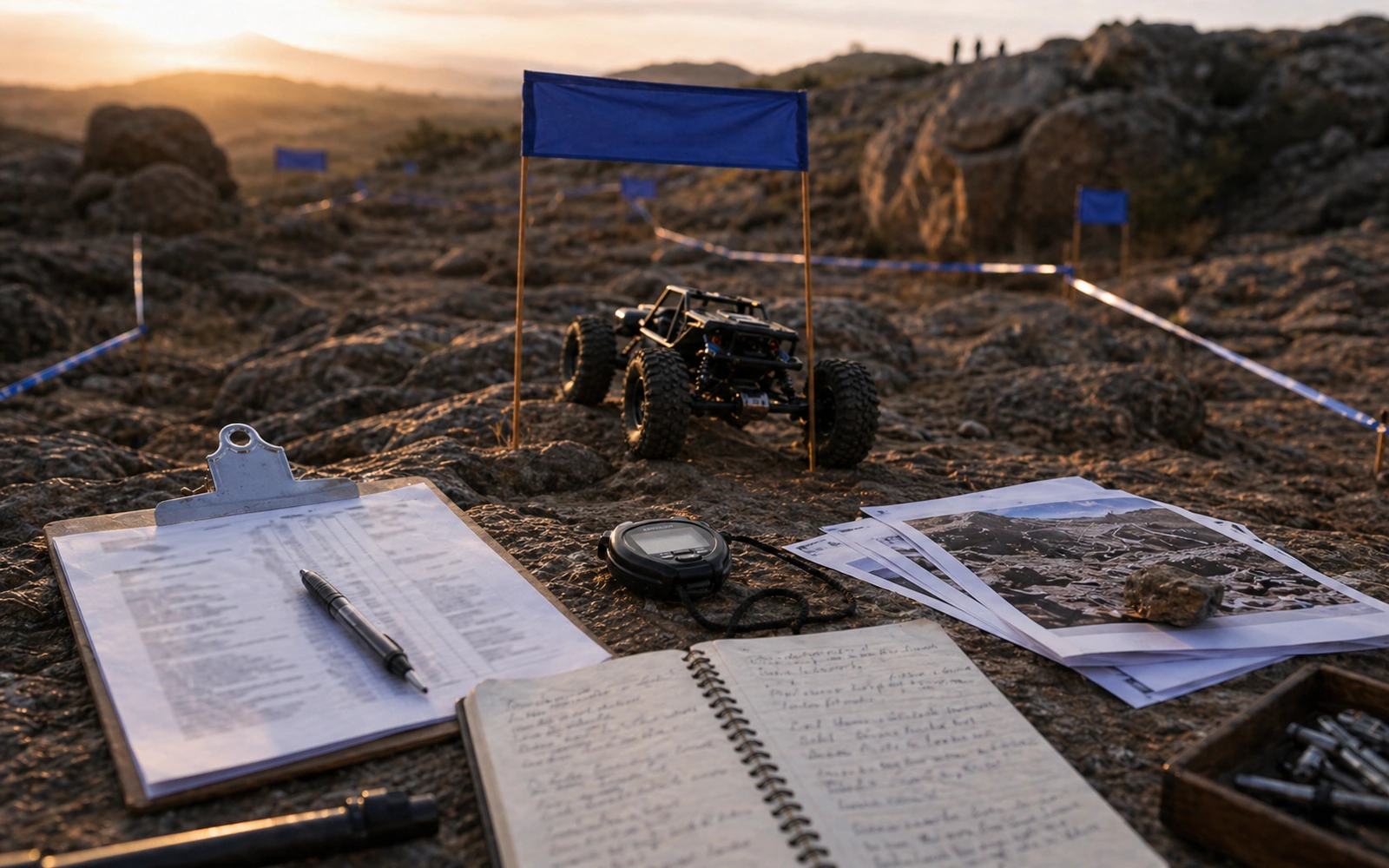
The WRCCA explainer is based on Jan-provided WRCCA 2026-2027 source text dated January 1, 2026. No official public URL was available in this workspace during implementation, so the public page uses cautious wording and does not present the text as a public citation. Anyone building for WRCCA-style classes should confirm the current organizer document and event-specific notes before entering.
Merchants, manuals, and product pages
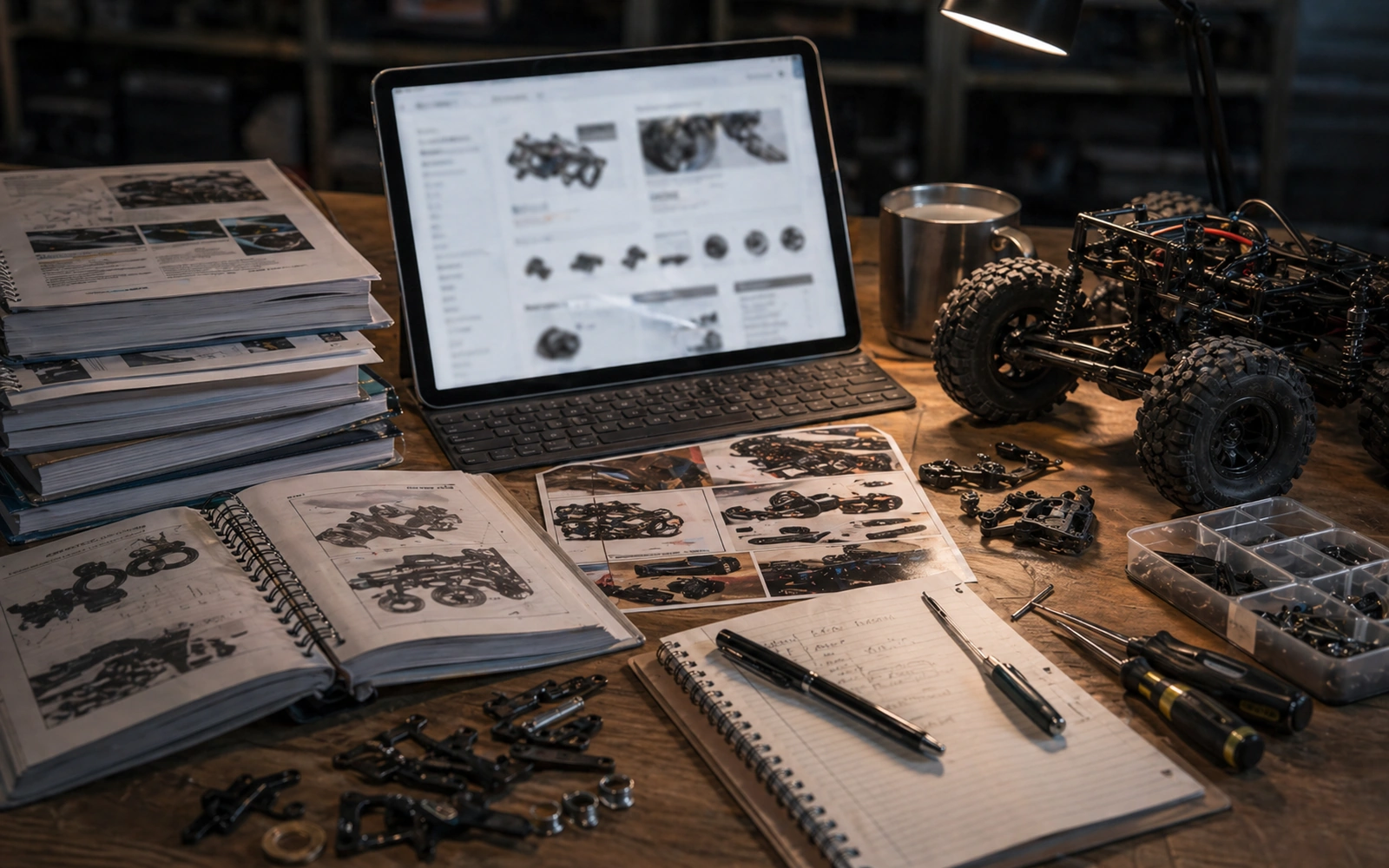
Merchant product pages are useful for product names, visible fitment notes, price, stock, images, checkout terms, and support paths. Crawlers Bot learning pages do not copy merchant descriptions and do not turn a merchant listing into a review. If a guide links to a category or platform path, the link is a research shortcut after the educational section, not a claim that one part is the right answer.
- Use merchant pages for current checkout details.
- Use manufacturer manuals for installation and safety notes.
- Use event organizers for class legality and scoring calls.
What sources cannot guarantee
A source can become stale. A merchant can change stock after a snapshot. A club can adjust a course procedure. A printed part can fit differently depending on printer calibration and material. A rulebook can be supplemented by local event notes. That is why the learning pages use verification language wherever rules, classes, fitment, scoring, or digital licenses matter.
Corrections and updates
If a page uses an outdated rule reference, unclear caveat, broken source link, or confusing explanation, use the site contact path with the affected URL and a current source. Crawlers Bot favors small factual corrections over sweeping rewrites, because the purpose of the publication is to keep beginners oriented without pretending to be every club, store, or manufacturer.